
Last Updated: November 2, 2026
Quick Summary
Bird-friendly coffee is worth it if you want verified habitat conservation, since the Smithsonian certification requires shade-grown conditions and organic practices checked by independent inspectors. If you're buying strictly on price per ounce, conventional beans win every time. Otherwise, a fresh organic roast from a roaster you trust is a reasonable fallback.
- All certified bird-friendly coffee is shade-grown, but not all shade-grown coffee is certified bird-friendly.
- Look for the Smithsonian seal first, then check the roast date on the bag.
- The certification guarantees growing conditions, not a flavor, freshness, or farmer income guarantee.
- To test taste fairly, buy two coffees from the same roaster at the same roast level and brew them identically.
- Organic certification alone does not require shade canopy, so it offers a different set of guarantees.
Table of Contents
- What Bird-Friendly Coffee Actually Means for Your Cup
- The Benefits of Bird-Friendly Coffee: Habitat, Biodiversity, and Your Morning Brew
- Smithsonian Bird Friendly Coffee Certification: What the Label Guarantees
- Shade-Grown Coffee vs. Bird-Friendly Coffee: The Critical Difference
- Bird-Friendly Coffee Brands: What to Look For (and What to Skip)
- The Real Cost: Is the Premium Worth the Price?
- Taste Test: How Bird-Friendly Coffee Compares
- Choosing Your Next Bag: A Practical Buying Guide
- Frequently Asked Questions
What Bird-Friendly Coffee Actually Means for Your Cup
Bird-friendly coffee is coffee grown on farms that maintain a forest-like canopy and meet specific habitat standards, verified by the Smithsonian Migratory Bird Center. At Smokin Java, we get this question constantly: is bird-friendly coffee worth the extra money, or is it just a label with a good story? The short answer is that it depends on what you're paying for, and most shoppers never check.
Here's the problem. "Bird-friendly" gets used loosely in coffee marketing. Some bags use it as a vibe. Others use it as a certified standard with real requirements behind it. Those are not the same thing, and the price gap between them is real.
Below, we'll break down what the certification actually guarantees, how shade-grown and bird-friendly differ, what the premium buys you, and how the coffee tastes. We'll also show you where our own roasts fit if you want to test the difference yourself.
The Benefits of Bird-Friendly Coffee: Habitat, Biodiversity, and Your Morning Brew
The core benefit is habitat. Bird-friendly coffee farms keep shade trees and canopy cover in place instead of clearing land for full-sun rows. That canopy gives migratory birds a place to rest and feed along their routes through Latin America, and it supports the broader ecosystem around the farm.
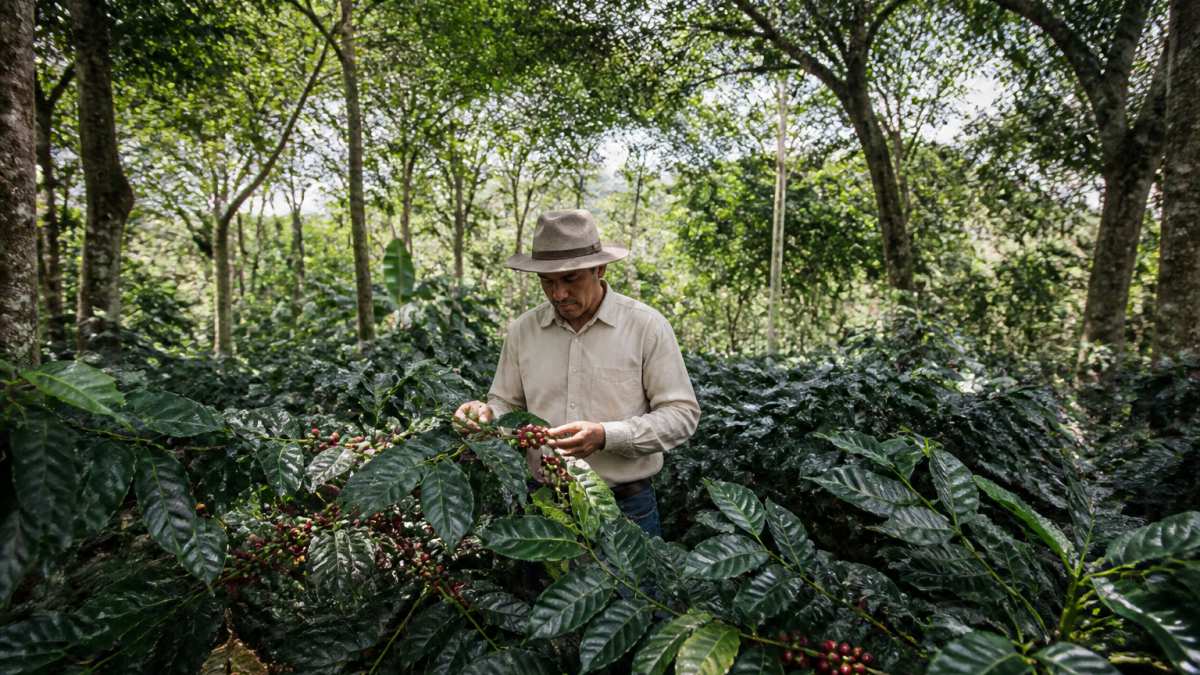
What most guides miss is that the benefits stack. Shade trees reduce erosion, hold moisture in the soil, and support the insects and plants that birds feed on. Biodiversity on a shade farm is not a side effect, it's the point. A sun-grown field is a monoculture. A shaded field is closer to a forest.
There's a practical benefit too. Shade-grown cherries ripen more slowly, and slower ripening often means denser beans and more developed flavor. That's part of why bird-friendly coffee can taste better, not just feel better to buy.
Smithsonian Bird Friendly Coffee Certification: What the Label Guarantees
The Smithsonian Bird Friendly certification is a habitat standard in coffee. It requires shade-grown conditions and organic farming practices, and it's verified by independent inspectors rather than self-reported by the farm.
That last part matters. A farm can't just print "bird-friendly" on a bag without certification. You can read the full criteria through the Smithsonian Migratory Bird Center's Bird Friendly program.
Here's the honest trade-off. Some growers maintain shade habitat but never pursue certification. So the label is a strong signal, but its absence isn't proof of bad farming.
Shade-Grown Coffee vs. Bird-Friendly Coffee: The Critical Difference
Shade-grown coffee and bird-friendly coffee are not the same thing. Shade-grown describes a growing method: coffee planted under a tree canopy. Bird-friendly is a certification that verifies shade-grown conditions plus specific habitat and organic requirements.
In other words, all certified bird-friendly coffee is shade-grown, but not all shade-grown coffee is certified bird-friendly. A farm can grow under shade and still fall short of the certification's canopy or biodiversity standards. If you want the habitat guarantee, look for the seal, not the phrase.
If you're still sorting out how origin labeling works on top of this, our guide to what single origin coffee beans are explains how growing method, region, and certification stack on a bag.
Bird-Friendly Coffee Brands: What to Look For (and What to Skip)
Look for the Smithsonian seal first, then check the roast date. A certified bag that sat in a warehouse for months is a worse buy than a fresh roast from a farm with strong shade practices.
What to skip: bags that say "bird-friendly" with no certification and no farm detail. Also skip vague "shade-grown" claims with no origin or grower named. Those are marketing words, not standards.
A short checklist we'd use in a store:
- Smithsonian Bird Friendly seal visible on the bag
- Organic certification listed separately
- Roast date printed, not just a best-by date
- Named farm, cooperative, or region
- Clear sourcing statement from the roaster
Best for: shoppers who want verified habitat impact and are willing to pay for it. Skip if: you're on a tight budget and can't verify the certification, in which case a fresh organic roast from a roaster you trust is the better call.
The Real Cost: Is the Premium Worth the Price?
Most guides tell you bird-friendly coffee costs more and leave it there. That's not useful when you're standing in a aisle trying to decide. Here's the honest math, with the caveat that prices vary by roaster, origin, and roast level.
A rough cost-per-cup comparison.
What the premium actually buys. You're paying for verified canopy cover, documented shade tree diversity, organic farming requirements, and independent inspection. You are not paying for a flavor guarantee, a freshness guarantee, or a farmer income guarantee. Those are separate claims that the certification does not make.
When it's worth it. If habitat conservation is the outcome you care about and the per-cup premium fits your budget, certified bird-friendly coffee is one of the few grocery purchases where the environmental claim is independently verified. If you're buying strictly on price per ounce, conventional beans win every time, that's not a close call.
When it's not. If the certified option is out of stock or outside your budget, a fresh organic roast from a roaster you trust is a reasonable fallback, but understand that organic certification alone does not require shade canopy. You're getting a different set of guarantees.
If packaging sustainability is part of your decision, our piece on whether compostable coffee packaging is actually sustainable digs into which claims hold up.
Taste Test: How Bird-Friendly Coffee Compares
Taste is where the 'worth it' question gets personal. The honest answer is that certification does not guarantee a better cup, it guarantees a set of growing conditions that can contribute to quality, alongside many other variables.
The mechanism. That's a tendency, not a rule. Altitude, variety, processing method, roast profile, and freshness all move flavor at least as much.
A transparent comparison framework. Rather than claim bird-friendly coffee wins, here's how to test it yourself with a fair setup:
- Buy two coffees from the same roaster, same origin if possible, same roast level, one certified bird-friendly, one conventional.
- Brew both with the same method, same dose, same water temperature, same grind.
- Taste side by side, blind if you can, and note sweetness, acidity, body, and finish.
Against other certified coffees, organic, fair-trade, Rainforest Alliance, the difference is often negligible, because those beans can also be shade-grown. The certification that matters most for flavor is freshness, not habitat.
What we find in the cup. It is not a different species of coffee. It's the same bean grown under different conditions, and the roast date on the bag will move flavor more than the seal will.
Our guide to the benefits of freshly roasted coffee beans explains why roast date moves flavor more than most labels do.
Choosing Your Next Bag: A Practical Buying Guide
Start with your brewing method, then your budget, then your certification priority. If you want a verified bird-friendly option, buy certified and check the roast date. If you want to test shade-grown quality first, start with a single origin from a region known for shade farming.
Two of ours fit that test. Our Peru is a medium roast, organic, with salted caramel, silky sweetness, and citrus, grown by the Cooperativa Agricola de Servicisios Norandino in Piura, Peru.

For a daily cup that won't overwhelm a casual drinker, our House Blend is smooth and consistent, and the 12-pack capsules suit a fast morning.
| If you want... | Try this | Why |
|---|---|---|
| A gentle daily cup | House Blend | Smooth, nutty, medium body |
| A bright, sweet single origin | Peru | Organic, fair-trade, citrus finish |
| A darker, richer profile | Bali Blue | Dark chocolate and molasses |
| Speed and convenience | 12-pack capsules | Sealed fresh, fast brew |
Frequently Asked Questions
What makes coffee bird-friendly?
Bird-friendly coffee is grown on farms that maintain a forest-like canopy, providing habitat for migratory birds and wildlife. Smithsonian Bird Friendly certification requires shade-grown coffee and organic farming practices. This protects biodiversity and supports healthy ecosystems.
Is bird-friendly coffee better for the environment?
Yes. Bird-friendly coffee farms preserve forest canopy, which sequesters carbon, prevents soil erosion, and supports wildlife. Unlike sun-grown coffee, which often leads to deforestation, bird-friendly farming maintains natural ecosystems. The organic practices also reduce chemical runoff, protecting water sources and soil health.
Does bird-friendly coffee taste different?
Bird-friendly coffee often has a richer, more complex flavor due to the shade-growing process. The slower ripening of beans in shaded environments can develop more sugars and acids, resulting in a sweeter, brighter cup. Many coffee enthusiasts find it comparable or superior to conventional coffee, though taste depends on the roast and origin.
Is shade-grown coffee the same as bird-friendly coffee?
Not exactly. Shade-grown coffee is a broader term for coffee grown under a canopy, but it doesn't guarantee organic practices or specific habitat standards. Bird-friendly coffee, especially Smithsonian certified, requires a minimum canopy cover, organic farming, and verified habitat protection. So all bird-friendly coffee is shade-grown, but not all shade-grown coffee is bird-friendly.
How can I tell if coffee is Smithsonian Bird Friendly certified?
Look for the Smithsonian Bird Friendly logo on the packaging. The certification requires farms to meet strict criteria for shade cover, organic management, and biodiversity. You can also check the Smithsonian Migratory Bird Center's website for a list of certified brands. Smokin Java offers organic coffees that align with these values, though certification varies by origin.
The hardest part of buying bird-friendly coffee is trusting the label. We roast every batch the day it ships, source organic beans through ethical farm partnerships, and pack in eco-friendly materials, so you can judge the coffee on freshness and flavor, not on a claim. Add a bag of our Peru or House Blend to your cart and taste the difference fresh roasting makes.
