

Last Updated: October 27, 2026
Quick Summary
Freshly roasted coffee delivers its best flavor roughly two to four weeks after the roast date, when carbon dioxide has escaped enough for clean brewing. Buying whole beans with a visible roast date and storing them away from oxygen, light, heat, and moisture keeps those flavors intact longer.
- Whole roasted beans stay at their best for about two to four weeks after the roast date.
- Ground coffee loses its aroma far faster than whole beans, often within days.
- Store beans airtight and opaque at room temperature, never in the fridge.
- Freeze extra beans in small airtight portions and grind them frozen without thawing.
- Dark roasts have a shorter peak window than light roasts because their aromatics fade faster.
Table of Contents
- Why Freshly Roasted Coffee Beans Taste Different
- How Long Do Coffee Beans Stay Fresh After Roasting?
- How to Store Roasted Coffee Beans So Flavor Holds
- Why Freshly Ground Coffee Tastes Better
- Roast Level and Freshness: Finding Your Trade-Off
- Health Benefits: What Freshness Does and Doesn't Change
- Buying Freshly Roasted Beans: What to Look For
- Start Your Next Bag With Smokin Java
- Frequently Asked Questions
Why Freshly Roasted Coffee Beans Taste Different
The benefits of freshly roasted coffee beans start with a simple fact: coffee is an agricultural product, and like any agricultural product, it peaks and then declines. At Smokin Java, we roast each batch the day it ships.
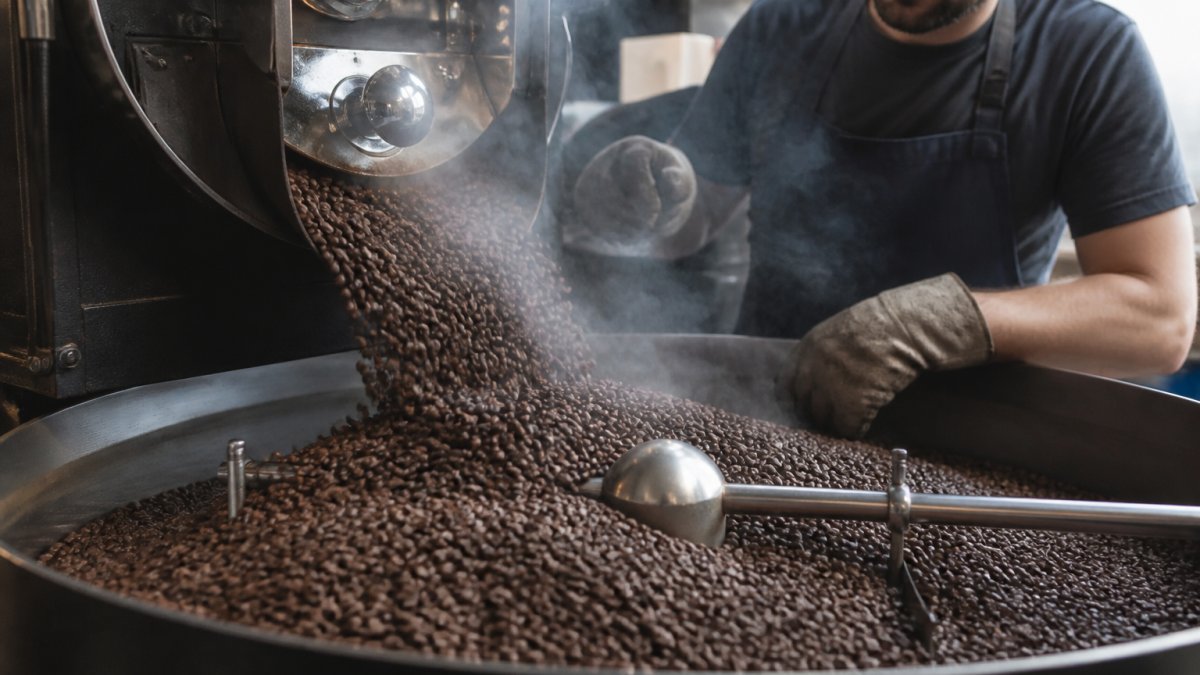
What Roasting Does to a Bean
Green coffee smells grassy and faintly vegetal. Roasting transforms it through heat, driving off moisture and triggering hundreds of chemical reactions that build the aroma and flavor compounds you taste in the cup. Roasting also produces carbon dioxide inside the bean, and that gas has to escape before the coffee brews well.
Degassing and the Freshness Window
Degassing is the release of carbon dioxide from roasted beans over the days and weeks after roasting. Too much gas and your pour-over foams up and stalls; too little and the coffee tastes flat and papery. The practical sweet spot for most brewing methods sits a few days to a few weeks after the roast date, which is why the roast date matters far more than any "best by" stamp.
How Long Do Coffee Beans Stay Fresh After Roasting?
Whole roasted coffee beans stay at their best for roughly two to four weeks after the roast date when stored properly, then decline gradually over the following months. Ground coffee loses its aroma far faster, often within days. This is the short answer, and it is also where most buying decisions go wrong.
The decline is not a cliff. Coffee does not spoil on day 29 and become undrinkable on day 30. It fades: the fruit notes flatten, the acidity softens, and the finish shortens.
How to Store Roasted Coffee Beans So Flavor Holds
Storing roasted coffee beans well comes down to controlling four things: oxygen, light, heat, and moisture. Keep those in check and a good bag will hold its character for weeks. Neglect them and even excellent beans taste tired within days. The practical goal is not indefinite preservation, it is slowing the same staling reactions that begin the moment beans leave the roaster.
What Actually Causes Stale Coffee
Three processes drive decline. Oxidation is oxygen reacting with aromatic oils and lipids, which flattens fruit and floral notes and introduces a papery, cardboard-like finish. Moisture migration lets humidity dilute volatile compounds and accelerate oxidation. Heat speeds both reactions, which is why a bag on a sunny windowsill fades faster than one in a dark cupboard. Carbon dioxide degassing continues in storage too, and while that gas protects beans early on, it escapes over time and leaves the bean more vulnerable to oxygen once the internal pressure equalizes.
Containers, Light, and Oxygen
- Use an airtight, opaque container, or keep beans in the original bag with the one-way valve sealed and the bag clipped shut
- Store at room temperature, roughly 60-75°F is a common target, away from the stove, oven, and sunny windowsills
- Buy in quantities you will finish in two to four weeks
- Never store beans in the fridge, where moisture and food odors migrate in
A one-way valve is worth understanding: it lets carbon dioxide escape so the bag does not balloon, while restricting oxygen entry. That is why the original bag, resealed properly, often outperforms a decorative jar.
Freezing: When It Helps and When It Hurts
Freezing is the most misunderstood storage method. It helps if you buy more than you can drink in a few weeks. Portion beans into small airtight bags or vacuum-sealed portions, freeze them, and take out one portion at a time. Freezing hurts when you thaw and refreeze the same bag repeatedly, or when you freeze a large container you open constantly, each opening draws in moist room air that condenses on cold beans.
Label each portion with the roast date so you know where you are in the freshness window. A common pattern is to freeze beans at their peak, a few days to two weeks after roast, rather than after they have already faded.
Shelf-Life Expectations at a Glance
| Storage Method | Typical Flavor Hold | Notes |
|---|---|---|
| Original bag, valve sealed, room temp | 2-4 weeks | Best for bags you finish quickly |
| Airtight opaque container, room temp | 2-4 weeks | Similar to bag; avoid clear containers |
| Refrigerator | Not recommended | Moisture and odor transfer |
| Freezer, portioned and airtight | Several months | Grind frozen or thaw sealed |
| Pre-ground, any method | Days to a couple of weeks | Surface area accelerates staling |
These are practical ranges, not guarantees, dark roasts tend to fade faster than light roasts, and whole beans outlast ground coffee by a wide margin. The takeaway is simple: control oxygen, light, heat, and moisture, portion what you freeze, and let the roast date guide your decisions rather than a best-by stamp.
Why Freshly Ground Coffee Tastes Better
Our Electric Coffee Grinder is equipped with a 150-watt motor and can grind up to 2 ounces of coffee beans within 20 seconds. It has one-touch operation.

Roast Level and Freshness: Finding Your Trade-Off
Roast level and freshness interact in ways that rarely get explained. Darker roasts lose their aromatic compounds faster because they have already been driven further through the roasting process, so a dark roast has a shorter peak window than a light roast. Lighter roasts tend to hold their character a bit longer and show more of the bean's origin. A Best Sellers Sample Pack lets you compare several roasts side by side.
Health Benefits: What Freshness Does and Doesn't Change
Most articles on freshly roasted beans blur two different questions: what does coffee do for health, and what does freshness add? The honest answer is that coffee itself carries well-documented potential benefits, while freshness is not one of the variables that meaningfully changes them. What freshness changes is flavor, aroma, and how much enjoyment you get from the cup. What it does not change is the fundamental composition of the bean in any way that would alter coffee's health profile.
Antioxidants, Caffeine, and What the Research Actually Covers
Coffee contains antioxidants, including chlorogenic acids and other polyphenols, and it is a major dietary source of these compounds for many people. Caffeine content is largely set by the bean, the roast level, and the dose, not by how many days have passed since roasting. The evidence linking coffee consumption to benefits around mental alertness, physical performance, and general health comes from studies of coffee as a beverage, not from studies of freshly roasted coffee specifically.
Roast Level and Compounds: A Modest Trade-Off
Roast level does shift some compounds. Chlorogenic acid content tends to be higher in lighter roasts because the compounds degrade with extended heat, while darker roasts develop other aroma and flavor compounds. Caffeine is relatively stable across roast levels, though darker roasts lose water mass during roasting, so a scoop of dark beans can contain slightly more caffeine by weight than the same scoop of light beans.
Caveats and Evidence Quality
Balance matters here. Coffee affects people differently, and freshness does not change that.
- Caffeine sensitivity. Some people experience jitteriness, rapid heartbeat, or disrupted sleep from caffeine at doses others tolerate easily.
- Sleep. Caffeine's half-life is long enough that afternoon coffee can affect nighttime sleep for many people; timing matters more than roast date.
- Pregnancy. Health authorities commonly advise limiting caffeine during pregnancy. Follow guidance from your healthcare provider rather than general coffee articles.
- Medication interactions. Caffeine and coffee compounds can interact with certain medications; check with a pharmacist or physician if you take prescription drugs.
- Evidence limits. Much of the research on coffee and health is observational, which shows associations rather than proof of cause and effect. Observational findings are useful but should not be read as guarantees.
The Practical Takeaway
Freshly roasted beans are worth buying because they taste better and make brewing more enjoyable, not because they are a health upgrade over coffee generally. If you want the health associations linked to coffee, drink coffee you actually like, in amounts that suit your tolerance, and let freshness serve flavor. Our House Blend and single-origin offerings are roasted to order so you get the flavor benefit without inflated health claims.
Buying Freshly Roasted Beans: What to Look For
- A roast date, not a best-by date. Best-by dates are about shelf stability, not peak flavor.
- Whole beans over pre-ground. You control the grind and the timing.
- A roaster who roasts to order. Coffee roasted the day it ships reaches you closer to its peak. If you want a dark roast to start with, try our French Roast.
- A clear origin story. Single-origin beans with named regions and farms are easier to evaluate and repeat.
- Packaging with a one-way valve. The valve lets carbon dioxide escape without letting oxygen in.
Start Your Next Bag With Smokin Java
At Smokin Java, we roast each batch the day it ships, source organic beans from renowned regions, and use ethical practices. Our single-origin offerings are there when you want to explore. Add a bag to your cart.
Frequently Asked Questions
Is freshly roasted coffee healthier than older coffee?
The health benefits people associate with coffee, such as antioxidants and caffeine, come from coffee in general, not from freshness alone. Freshly roasted coffee mainly wins on flavor and aroma, because the compounds that create those qualities fade after roasting. If you drink coffee for its antioxidants, choosing fresh beans still helps you enjoy the cup enough to keep the habit, but freshness is not a separate health claim. Store beans properly and brew within the freshness window to get the most from each bag.
How long do freshly roasted coffee beans stay fresh after roasting?
Most roasted beans hit their best flavor roughly 3 to 14 days after the roast date, and they stay enjoyable for about 4 to 6 weeks when stored well. Whole beans hold up longer than pre-ground coffee because less surface area is exposed to oxygen. After that window, the coffee is safe to drink but the aroma and complexity fade. Check the roast date on the bag rather than a best-by date, and buy amounts you will finish within a month.
Why does freshly ground coffee taste better than pre-ground?
Grinding exposes far more surface area to oxygen, so the aromatic oils and flavor compounds escape quickly. Pre-ground coffee can lose noticeable aroma within days, while whole beans keep those compounds locked in until you grind. Grinding right before brewing also lets you match the grind size to your method, which improves extraction. A burr or electric grinder used just before brewing makes the biggest difference to why freshly ground coffee tastes better.
Should I store freshly roasted coffee beans in the freezer?
Freezing works if you use an airtight container and let the beans come to room temperature before grinding, but it is easy to get wrong. Every time you open the container, moisture and condensation can damage the beans. For most home brewers, an opaque airtight container in a cool cupboard finishes a bag before freezing becomes necessary. If you buy in bulk, freeze in small portions you will use within a week and avoid repeated thawing.
