

Last Updated: November 9, 2026
Quick Summary
Yes, you can grind oily beans in a burr grinder, but oil slowly builds up on the burrs and grinding chamber. Clean the grinder more often when using oily beans, and grind consistency stays reliable over time.
- Darker roasts and older beans release more surface oil than light, fresh beans.
- Oil mixed with fine grounds forms a sticky film that can change grind size.
- Brush the burrs and chamber after every few uses with oily beans.
- Unplug the grinder and clear any stall by hand before restarting it.
- Store beans in a sealed, airtight container away from heat and light.
Table of Contents
- Can You Grind Oily Beans in a Burr Grinder? The Short Answer
- Why Some Coffee Beans Become Oily
- How Oily Beans Affect Burr Grinder Performance
- How to Clean a Burr Grinder After Grinding Oily Beans
- Grinder Cleaning Tablets: Do They Work on Burrs?
- What to Do If Coffee Beans Are Too Oily
- Why Spray Water on Beans Before Grinding, and Whether You Should
- Choosing a Grinder for Oily Beans and Booking Your Next Brew Setup
- Frequently Asked Questions
Can You Grind Oily Beans in a Burr Grinder? The Short Answer
Yes, you can grind oily beans in a burr grinder. The grinder will work, but the oil will slowly build up on the burrs and grinding chamber. Clean the grinder more often when you use oily beans, and the results stay consistent.
Oily beans are common with dark roasts and some single-origin coffees. The oil on the surface is normal, but it does affect how your grinder performs over time.
The problem is buildup. Oil and fine grounds stick together, and that residue can change your grind size and slow the grinder down.
Why Some Coffee Beans Become Oily
Beans look oily when the roast pushes natural oils from inside the bean to the surface. Darker roasts do this more than light roasts. The longer and hotter the roast, the more oil comes out.
Beans also get oilier as they age. Fresh beans release a little oil, but stale beans can develop a sheen that tastes flat or rancid. Storing beans in a sealed, airtight container away from heat and light slows this down.
Watch for these signs of oily beans:
- A shiny or glossy surface
- Dark beans that feel slick between your fingers
- Oil marks on the bag or on your fingers after handling
- Grounds that clump or stick to the grinder
How Oily Beans Affect Burr Grinder Performance
Oil is the main issue with burr grinders. The oil coats the burr surfaces and mixes with fine coffee dust, which forms a sticky film. Over several uses, that film can narrow the path the beans travel, which affects grind consistency. The severity depends on the roast level, how oily the beans are, and how often you clean.
Here is what you might notice, what likely causes it, and what to do:
- Slow or uneven bean feeding. Oil makes beans stick together and cling to the hopper walls, so they do not flow evenly into the burrs. Try dosing in smaller batches and gently shaking the hopper to keep beans moving. If feeding stays erratic, clean the hopper and the burr entry area.
- Grind size drifts, with more fines or boulders than usual. Residue on the burr edges changes the cutting geometry. Brush the burrs and run a grinder cleaning tablet if your manual allows it, then re-test your grind setting.
- Grounds clump or stick to the chute and chamber. This is oil mixed with fine dust. Empty and brush the chute after each session with oily beans. A dry cloth removes the sticky film from accessible surfaces.
- The grinder sounds slower or strained. A buildup of oily grounds can increase resistance. Stop grinding, unplug the unit, and clear the chamber before restarting. Never force a stalled grinder.
- Stale or rancid smell from the grinder. Old oil residue oxidizes and can taint fresh grounds. A thorough cleaning with a brush and, where approved, a cleaning tablet usually resolves it.
Watch out: If the grinder stalls or the motor strains, unplug it immediately and clear the blockage by hand. Do not run it again until the burrs and chamber are clean and the burrs spin freely.
The good news is that a regular cleaning routine solves most of these problems. You do not need special equipment to keep the grinder running well.
Flat vs. Conical Burrs and Oil Buildup
Burr grinders come in two main designs: flat burrs and conical burrs. Both can handle oily beans, but they collect residue differently.
Flat burrs have two parallel rings that grind the beans between them. Oil and grounds can settle on the flat surfaces, so cleaning those surfaces carefully matters.
How to Clean a Burr Grinder After Grinding Oily Beans
Clean your grinder after every few uses with oily beans, or at least once a week if you grind daily. Always unplug the grinder first. The steps below cover routine cleaning that most home burr grinders allow; check your manual for any manufacturer-specific limits on removing burrs or using cleaning products.
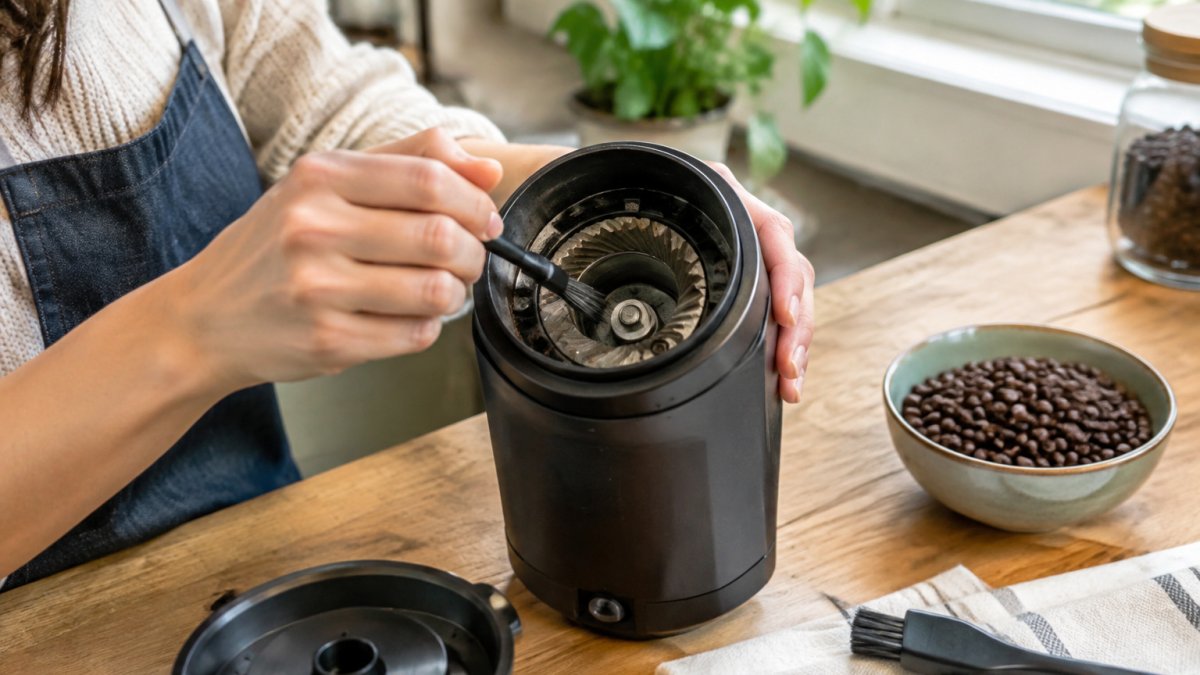
- Unplug the grinder and empty the hopper. Remove any remaining beans and set them aside in an airtight container. Brush loose grounds from the hopper into the trash.
- Remove the burrs or the bean chamber. Follow the manufacturer's instructions for your model. Some grinders let you lift out the upper burr by hand; others require a tool or a quarter-turn release. Do not force any part.
- Brush the burrs and chamber. Use the brush included with the Electric Coffee Grinder, or a small stiff brush, to clear grounds and loose residue. Brush away from the motor housing and into a trash bin, not down the sink.
- Wipe away oil film. Use a dry cloth to remove sticky oil from the burr surfaces and the chamber walls. For stubborn film, a cloth barely dampened with water is acceptable only if your manual permits it; dry immediately and thoroughly.
- Run a cleaning cycle if approved. Grind a small amount of dry rice or a cleaning product recommended by your grinder's maker to pull out leftover grounds. Check the manual first; some makers advise against rice because it can be too abrasive.
- Reassemble and test. Reinstall the burrs and chamber exactly as the manual shows. Grind a small batch and check the grind size before brewing. Discard the first few grams if you used a cleaning product.
Watch out: Never use water on the burrs or motor housing unless the manufacturer says it is safe. Moisture can cause rust or damage the parts. Use a brush and dry cloth instead.
For deep cleaning that requires disassembling the burr carrier or removing the motor cover, follow the manufacturer's service instructions or contact the maker. Routine brushing and dry wiping handle most oily-bean buildup without a full teardown.
Grinder Cleaning Tablets: Do They Work on Burrs?
Check your grinder's manual before using any tablet. Some manufacturers advise against them, and some tablets can leave a residue if you do not run a rinse cycle afterward. Follow the product label closely, and brush the burrs by hand afterward.
What to Do If Coffee Beans Are Too Oily
If your beans are very oily, you have a few options:
- Choose a lighter roast if the oil is affecting your grinder too much
- Store beans properly in an airtight container, cool and dark, to slow oil migration
- Grind smaller batches so less oil builds up in the grinder at once
- Clean the grinder more often during the period you use oily beans
Oily beans are not always a sign of poor quality. Some dark roasts are naturally oily. What matters is how your grinder handles them, and a quick cleaning routine usually fixes the problem.
Why Spray Water on Beans Before Grinding, and Whether You Should
Some people spritz a few drops of water on beans before grinding to reduce static and fine dust. This is a home trick, not a standard practice, and it has trade-offs.
Water can help reduce static, but it can also cause clumping and moisture buildup in the grinder. For most home users, dry grinding with regular cleaning works better. If you try the water method, use only a very light mist and clean the grinder thoroughly afterward.
Choosing a Grinder for Oily Beans and Booking Your Next Brew Setup
If you are shopping for a grinder to use with oily beans, look for a model that is easy to open and clean. Our Electric Coffee Grinder is a 150 Watt grinder that grinds up to 2 ounces of coffee beans within 20 seconds, with a stainless steel build and a brush included. It is listed at $66.00. Note that it is designed to run for no more than 60 seconds at a time, and the bowl should not be filled more than two-thirds full.

If you want to test oily beans at home, try a single origin like our Papua New Guinea bean, which can show a glossy sheen when roasted dark. Before you grind, check how your grinder handles it, and clean it afterward.

For more on bean storage and freshness, read Why Coffee Beans Rest and How To Store Organic Coffee Beans. If your home-brewed coffee tastes off after grinding oily beans, Sour Coffee Why Home Brewed Coffee Tastes Sour explains common causes.
Smokin Java roasts each batch upon order. Pick the Electric Coffee Grinder and a bag of beans, keep your grinder clean, and your home brew will taste the way it should.
Frequently Asked Questions
Will oily coffee beans clog a burr grinder?
They can, especially when the beans are very dark roasted and the grinder is not cleaned regularly. Oil from the beans sticks to burr surfaces and the grinding chamber, mixing with fine grounds to form a paste. Over time that residue can slow the flow of grounds, cause clumping and leave the grind size uneven. Clogs are more likely with fine settings and with high-oil beans. Brushing out the chamber after each few batches and wiping the burrs periodically prevents most buildup. If grounds stop falling, stop the grinder and clean it before running more beans through.
What should you do if coffee beans are too oily?
First, check whether the oil is a normal sheen from a dark roast or a sign of stale, rancid coffee. Fresh dark roasts often look glossy and grind fine with regular cleaning. If the beans smell harsh or stale, or the oil is heavy enough to leave marks on your fingers, the beans are probably past their best. Switching to a medium roast or a fresher batch reduces the problem. If you still want to use oily beans, grind smaller amounts, clean the grinder more often and avoid leaving grounds sitting in the hopper.
Can you use grinder cleaning tablets in a burr grinder?
Many manufacturers suggest grinder cleaning tablets for removing coffee oils, but check your grinder's manual first, since some models warn against them or specify a particular cleaning product. Run the tablet through according to the package directions, then run a small amount of fresh beans or rice to clear any residue, and wipe the chamber dry. Cleaning tablets help with buildup but do not replace brushing and periodic disassembly. Avoid using water or soap inside the burr assembly unless the manual says it is safe.
Why do people spray water on coffee beans before grinding?
A very light mist of water is sometimes used to reduce static and stop fine grounds from clinging to the chamber and the grinder's walls. Some people also use it to cut down on the mess from oily beans. The effect is small and inconsistent, and adding too much water can cause clumping and uneven extraction. Most home users get better results by brushing the grinder regularly than by misting beans. If you try it, use only a tiny amount and dry the grinder thoroughly afterward.
