

Table of Contents
- Why Does My Home Brewed Coffee Taste Sour? Start Here
- Under-Extracted Coffee: The Usual Suspect
- How to Fix Sour Coffee With One Change at a Time
- Coffee Grind Size for Brewing: The Biggest Lever You Have
- Coffee Brewing Time and Water Temperature
- Water Quality, Ratio, and Equipment Cleanliness
- Bean Freshness, Roast Level, and Storage
- A Brew Dial-In Chart by Method
- Frequently Asked Questions
Last Updated: October 5, 2026
Why Does My Home Brewed Coffee Taste Sour? Start Here
If your home brewed coffee tastes sour, the problem is almost always under-extraction. That means hot water moved through the coffee grounds too fast, or didn't pull enough out of them, leaving behind sharp acids instead of sweet, balanced flavor.
Below, we'll walk you through a simple troubleshooting sequence that starts with grind size and works through brew time, water temperature, and bean freshness.
But first, here's what most guides get wrong: they tell you to change five things at once. That just leaves you guessing. Change one variable, taste the result, then adjust again. That's how you actually fix a sour cup.
Specialty Coffee Association brewing standards
Pleasant Acidity vs. a Brewing Defect
Not every bright note in your cup is a flaw. Acidity is the pleasant, fruity zing you get from a good light roast. A brewing defect tastes harsh, thin, and vinegar-like.
Here's how to tell them apart:
- Pleasant acidity: crisp, fruity, leaves a clean finish
- A defect: sharp, hollow, makes you wince
- Quick test: if adding a pinch of salt softens it, it's under-extracted
Under-Extracted Coffee: The Usual Suspect
Under-extracted coffee happens when water doesn't spend enough time with the grounds. The result is a cup that's sour, weak, and thin. Extraction is simply the process of hot water pulling flavor compounds out of ground coffee.
Different compounds dissolve at different rates. Acids come out first. Then sugars and sweetness. Then bitter notes. When you stop extraction too early, you're left with mostly acids.
That's the whole story behind a sour cup.
Signs You Are Under-Extracting, Not Over-Extracting
Under-extraction and over-extraction taste completely different. Knowing which one you have saves you from making the wrong fix.
| Taste Signal | Diagnosis | First Fix |
|---|---|---|
| Sour, sharp, salty | Under-extracted | Grind finer |
| Weak, watery body | Under-extracted | Increase dose |
| Bitter, dry, harsh | Over-extracted | Grind coarser |
| Astringent aftertaste | Over-extracted | Lower water temp |
How to Fix Sour Coffee With One Change at a Time
The fastest way to fix sour coffee is a fixed sequence: adjust grind size first, then brew time, then water temperature, then freshness. Only change one thing per batch.
Here's the sequence we recommend:
- Grind finer. This is the single biggest lever. Go one notch finer and re-brew.
- Extend brew time. Add 15-30 seconds of contact time with the water.
- Raise water temperature. Aim for 195-205°F.
- Check your ratio. Use about 1 gram of coffee per 16 grams of water.
- Check bean freshness. Old beans taste flat and sour.
Taste after each change. Write it down. Within three or four batches, you'll land on a balanced cup.
USDA organic coffee labeling standards
Coffee Grind Size for Brewing: The Biggest Lever You Have
Coffee grind size for brewing controls how fast water moves through the grounds. Finer grinds slow the water down and pull out more flavor. Coarser grinds let water rush through, which leaves acids behind.
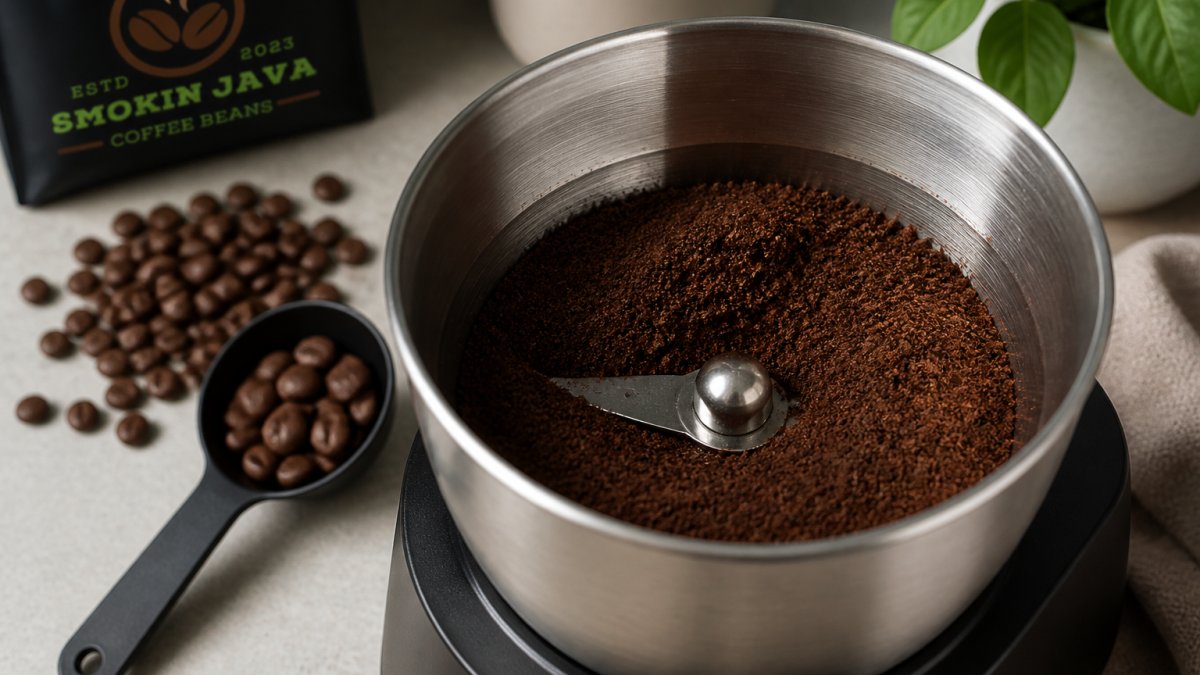
If your coffee tastes sour, grind finer. That's it. This one change fixes most sour cups. Our Electric Coffee Grinder grinds up to 2 ounces of beans in about 20 seconds, which makes small adjustments easy to test back to back.

When to Grind Finer and When to Grind Coarser
Grind finer when the cup tastes sour, weak, or thin. Grind coarser when it tastes bitter, dry, or harsh.
A few rules of thumb:
- Sour and weak: go two notches finer
- Sour but strong: go one notch finer
- Bitter and dry: go one notch coarser
- Just right: stop adjusting
Coffee Brewing Time and Water Temperature
Coffee brewing time and water temperature work together to control how much flavor you pull from the grounds. Longer contact time and hotter water both increase extraction. If your coffee tastes sour, one or both of these variables is likely pulling the cup short.
Water temperature is the easier one to measure. For most home methods, keep water between 195°F and 205°F. Below 195°F, water struggles to dissolve sugars and heavier compounds, so the cup stays sharp and sour. Above 205°F, you risk scorching the grounds and pulling bitter, dry notes. The sweet spot for most brewers is 200°F.
Brew time depends heavily on your method. Here is a practical starting range for each:
| Method | Target Brew Time | Target Water Temp |
|---|---|---|
| Pour-over (V60, Chemex) | 2:30-3:30 | 200°F |
| French press | 4:00 | 200°F |
| Drip machine | 5:00-6:00 | 195-205°F |
| AeroPress | 1:30-2:00 | 195°F |
| Moka pot | 4:00-5:00 | 200°F |
| Espresso | 25-30 sec | 200°F |
If your coffee tastes sour, add 15 to 30 seconds of contact time and taste again. For pour-over, that means a slower pour or a finer grind to slow the flow. For French press, it means steeping longer before you plunge. For espresso, it means adjusting the grind to extend the shot time.
One common mistake is changing both time and temperature at once. Pick one variable, adjust it, and taste. If the cup is still sour after adding time, then raise the temperature by 5°F and try again. This one-change-at-a-time approach is how you dial in a sour cup without guessing.
Water Quality, Ratio, and Equipment Cleanliness
Water makes up more than 98% of your cup, so its chemistry directly affects how sour or balanced your coffee tastes. Most guides skip this, but it is one of the most overlooked causes of sour home brew.
Water chemistry and minerals. Pure distilled water tastes flat and actually under-extracts because it lacks the minerals that help dissolve coffee compounds. On the other hand, very hard water with high mineral content can block extraction and leave sour notes behind. The sweet spot is filtered water with a moderate mineral content, roughly 50 to 150 ppm of total dissolved solids. If you use a home water filter, that is usually enough. If your tap water tastes strongly of chlorine or minerals, switch to filtered or bottled spring water.
Coffee-to-water ratio. A common starting point is 1 gram of coffee to 16 grams of water. Too little coffee and the cup tastes weak and sour because there is not enough material to extract from. Too much coffee and you risk bitterness. Use a digital scale for accuracy, volume scoops vary widely and can throw off your ratio by 20% or more.
Equipment cleanliness. Old coffee oils go rancid and add a sour, stale taste that mimics under-extraction. Rinse your brewer daily with hot water and deep clean it weekly. For drip machines, run a vinegar or citric acid solution through the system, then rinse with fresh water. For French presses and pour-over cones, disassemble and scrub all parts. A dirty brewer can make even perfectly dialed-in coffee taste sour.
If you have addressed grind, time, temperature, and cleanliness and the cup is still sour, try a different water source. A simple switch from tap to filtered water solves a surprising number of stubborn sour-coffee cases.
Bean Freshness, Roast Level, and Storage
Bean freshness changes how your coffee tastes. Fresh coffee has more carbon dioxide, which helps water extract evenly. Stale coffee loses that gas and brews sour and flat.
Roast level matters as well. Light roast beans are denser and hold more acidity. If you brew a light roast with a coarse grind, you'll get a sour cup almost every time. Medium and medium-light roasts are more forgiving.
Store your beans in an airtight container away from light, heat, and moisture. Whole beans stay fresh longer than pre-ground. Grind right before you brew.
Our Ethiopia Natural is a medium-light roast with notes of milk chocolate, caramel, and fruit. It's a good pick if you want brightness without a harsh edge. For something softer, try our Gourmet Donut Shop blend, which leans on cocoa and caramel.

A Brew Dial-In Chart by Method
Use this chart as your starting point. Adjust one variable at a time from here.
| Method | Grind | Water Temp | Brew Time | Ratio |
|---|---|---|---|---|
| Pour-over | Medium-fine | 200°F | 3 min | 1:16 |
| French press | Coarse | 200°F | 4 min | 1:15 |
| Drip machine | Medium | 195-205°F | 5-6 min | 1:16 |
| AeroPress | Fine | 195°F | 1.5-2 min | 1:14 |
| Moka pot | Fine | 200°F | 4-5 min | 1:10 |
| Espresso | Very fine | 200°F | 25-30 sec | 1:2 |
Start at these numbers. If the cup tastes sour, move one step finer or add time. If it tastes bitter, do the opposite.
Sour coffee is frustrating, but it's a solvable problem. The fix usually comes down to grind size, water temperature, and freshness, and you can dial all three in over a few batches.
When you're ready to remove bean quality from the equation, Smokin Java roasts every batch the day it ships and sources organic beans from renowned growing regions. Our single-origin offerings like Tanzania and our signature blends give you fresh coffee with a clean, balanced flavor, so you can focus on dialing in your brew instead of fighting stale beans. Add to cart and taste the difference fresh roasting makes.

Frequently Asked Questions
Why does my coffee taste sour in my mouth?
Sour coffee usually signals under-extraction: hot water moved through the grounds too fast to pull out the sweeter compounds, leaving the bright acids behind. Common causes include a grind that is too coarse, water below roughly 195°F, a brew that finishes too quickly, or a coffee-to-water ratio that is too weak. Fix one variable at a time, starting with grind size, then taste again before changing anything else.
How do I fix coffee that tastes sour?
Grind finer in small steps, raise your water temperature toward 200°F, and extend contact time slightly. Change only one variable per brew so you can tell what worked. If the cup turns bitter, you went too far and should back off. A gram scale and a consistent ratio, around 1:15 to 1:17 coffee to water, make each adjustment measurable instead of guesswork.
Should I use a finer grind if my coffee tastes sour?
Yes, in most cases. A finer grind slows the flow of water and increases contact time, which raises extraction and reduces sourness. Adjust in small increments rather than jumping to espresso-fine, and re-taste after each change. If the brew stalls or the cup turns bitter or dry, grind coarser again. The right coffee grind size for brewing sits between sour and bitter.
Can stale or improperly stored coffee taste sour?
Yes. Coffee exposed to oxygen, heat, moisture, or light loses freshness and can develop flat, sharp, or sour notes. Store beans in an airtight container away from the stove and direct sun, and buy in amounts you will finish within a few weeks. Roast date matters more than a best-by label, so check when the beans were roasted, not just when the bag was sealed.