

Table of Contents
- Why Freshly Roasted Coffee Beans Need to Rest
- How Long to Rest Coffee Beans by Roast Level
- When to Brew Coffee After Roasting: A Tasting Test
- Resting Coffee for Espresso vs. Filter Brewing
- How to Store Freshly Roasted Coffee Beans While They Rest
- Reading Roast Dates and Freshness Claims
- Troubleshooting Taste and Extraction During the Rest Period
- Conclusion: Picking the Right Beans to Rest
- Frequently Asked Questions
Last Updated: October 19, 2026
Why Freshly Roasted Coffee Beans Need to Rest
Freshly roasted coffee beans rest because roasting traps carbon dioxide inside the bean, and that gas escapes slowly over days. Brew too soon and the CO2 fights your water, throwing off extraction and muting flavor. At Smokin Java, we roast every batch the day it ships, so this question lands in our inbox constantly. Here is the short version: coffee beans rest to release gas, stabilize flavor, and brew evenly.
Resting coffee is the practice of letting roasted beans sit in a sealed container for days after the roast date before grinding and brewing them.
The science is simple. Heat from roasting builds pressure inside the bean's cellulose structure. That pressure pushes CO2 outward for days. Oxygen creeps in at the same time and starts staling the volatile compounds that carry aroma. Rest balances those two forces. Too little rest means gassy, uneven brews. Too much means flat, papery coffee.
How Long to Rest Coffee Beans by Roast Level
Most beans hit their best window between 4 and 14 days after roasting, and roast level moves that window. Dark roasts degas fast because the bean structure is more porous. Light roasts hold gas longer and often need a full week or more. Processing method shifts things too: natural process beans often settle faster than washed beans because fruit sugars and oils change how gas moves through the bean.
Here is a practical starting chart that combines roast level, processing method, and brew method. Use it to pick a first brew day, then adjust with the tasting test below.
| Roast Level | Processing | Filter Rest Window | Espresso Rest Window | Readiness Signs |
|---|---|---|---|---|
| Light | Washed | 10-14 days | 12-16 days | Bloom settles within 30 seconds; aroma is sweet, not bread-like |
| Light | Natural | 7-12 days | 10-14 days | Fruit notes round out; less sharp acidity on finish |
| Medium | Washed | 7-10 days | 9-12 days | Balanced sweetness; even extraction with no gushing |
| Medium | Natural | 5-9 days | 8-11 days | Berry and cocoa notes integrate; less fermenty bite |
| Dark | Washed | 4-7 days | 6-9 days | Oils visible but not pooling; smooth, low-acid cup |
| Dark | Natural | 3-6 days | 5-8 days | Heavy body settles; ashy edge fades |
| Espresso roast | Any | 8-12 days | 10-14 days | Puck holds pressure; shot time stabilizes |
How to read the chart: Start at the early end of your window and brew one cup. If it tastes sharp, gassy, or drains fast, wait two more days and try again. If it tastes flat or papery, you have passed the peak, finish the bag sooner.
Why processing matters: Natural process beans dry with the fruit still on, so they carry more sugars and oils into the roast. Those compounds can mask early gas and make the bean taste rounder sooner, but they also risk fermenty or boozy notes if rested too long. Washed beans have a cleaner structure, so gas release is more predictable and the peak window is often narrower. Honey process sits between the two.
A note on grind and water: A fine grind exposes more surface area and speeds gas release during brewing, so espresso and moka pot can tolerate slightly fresher beans than a coarse French press. Hard water buffers acidity and can make a gassy bean taste smoother than it is, while soft water reveals sharpness. If you change grind size or water source, re-test your rest window, do not assume last month's ideal day still applies.
When to Brew Coffee After Roasting: A Tasting Test
The only reliable way to answer when to brew coffee after roasting is to taste the same bean on a schedule. This experiment takes four brews over two weeks.
- Pick one bag and one brew method. Keep everything else identical.
- Brew a cup on day 2, day 5, day 9, and day 14 after the roast date.
- Use the same dose, grind size, water, and temperature every time.
- Write down three things: aroma, sweetness, and finish.
- Note which cup tastes fullest and most balanced.
Most tasters find the sweet spot lands somewhere in the middle of the schedule. Day 2 usually tastes sharp and gassy. Day 14 often tastes softer and less vivid. The day that hits both aroma and clarity is your answer.
Resting Coffee for Espresso vs. Filter Brewing
Espresso and filter coffee want different rest periods, and this is where most guides get vague. Espresso forces water through a packed puck under pressure. Fresh CO2 resists that flow, so shots pull fast, gush, and taste sour. Filter methods like pour-over and drip are gentler.
Here is a side-by-side comparison with practical signs of readiness for each method.
| Factor | Espresso | Filter (Pour-Over/Drip) |
|---|---|---|
| Typical rest window | 7-14 days | 4-10 days |
| What gas does | Resists pressure, causes gushing and channeling | Causes excessive bloom and uneven extraction |
| Sign beans are too fresh | Shot pulls in under 20 seconds, sour and thin | Bloom bubbles aggressively for over 45 seconds, cup tastes hollow |
| Sign beans are ready | Shot time stabilizes at 25-30 seconds, sweetness and body balance | Bloom settles within 30 seconds, cup has clarity and rounded acidity |
| Sign beans are past peak | Shots taste flat or ashy, puck is soupy | Aroma fades, cup tastes papery or dull |
| Adjustment while resting | Grind finer as gas drops; keep dose steady | Grind slightly finer or extend bloom as gas drops |
Espresso readiness in practice: Pull a shot every two days starting on day 5. Note the shot time and taste. A gassy bean will gush, often under 20 seconds for a normal 1:2 ratio, and taste sharply sour because water channels through cracks in the puck instead of extracting evenly. As gas drops, shot time lengthens and sweetness emerges.
Filter readiness in practice: Brew a cup every two days starting on day 3. Watch the bloom: freshly roasted beans bubble vigorously and can push the bed up the filter. That is not a defect, it is gas escaping.
Troubleshooting during the rest period: If espresso gushes, rest longer or grind finer, but change only one at a time. If filter coffee tastes weak despite a good dose, check your bloom time and water temperature before blaming the beans.
How to Store Freshly Roasted Coffee Beans While They Rest
Store beans whole, in a sealed container, away from light and heat. A one-way valve bag is ideal because it lets CO2 out while keeping oxygen from getting in. If you transfer to a jar, use one that seals tight and keep it in a cool cupboard, not the fridge.
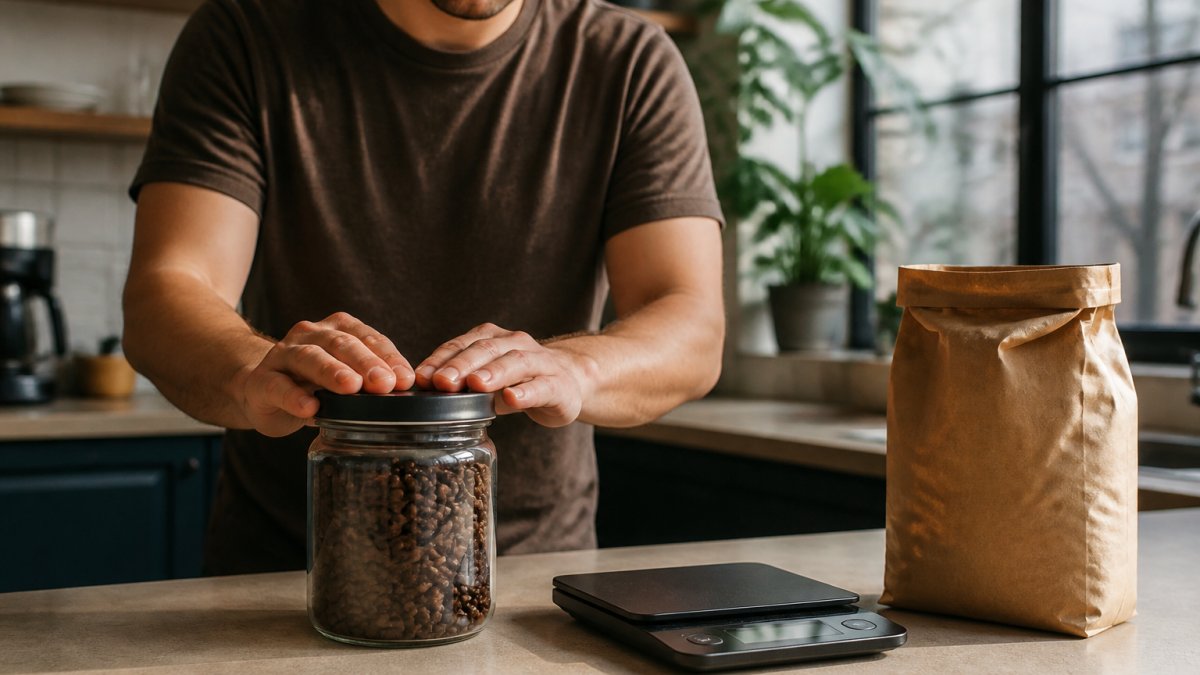
Here is what actually protects freshness:
- Keep beans whole until brew day. Grinding speeds up staling fast.
- Use a one-way valve bag or a vacuum-sealed canister.
- Skip the freezer unless you are storing months of supply.
- Buy in amounts you will finish within a few weeks.
- Keep the roast date visible so you always know where you are in the window.
Oxygen exposure is the real enemy. Every time you open the bag, fresh air swaps in. Squeeze out excess air before resealing, and resist the urge to open the bag just to smell it.
Reading Roast Dates and Freshness Claims
A roast date tells you more than a best-by date ever will. Best-by dates are about safety and shelf life, not flavor. A bag stamped "best by" six months out tells you nothing about when the coffee peaked.
Look for a printed roast date on the bag. If a roaster only prints a best-by date, ask when the beans were roasted. Freshly roasted coffee should reach you within days of roasting, not weeks.
At Smokin Java, we print the roast date because we roast each order the day it ships. That means your bag arrives close to the start of its rest window, not the end. You get to taste the climb, not just the tail end.
Troubleshooting Taste and Extraction During the Rest Period
Weird cups during the rest period are normal, and most have a simple fix. Sour, thin, or fast-draining brews usually mean the beans are still gassy. Wait a few more days before changing your recipe.
Bitter or dull cups late in the window usually mean the beans have moved past their peak. Check your storage first, then your grind. Here is a quick guide:
- Sour and gushing espresso: beans too fresh, rest longer.
- Weak bloom in pour-over: beans are settling, this is fine.
- Flat aroma after two weeks: beans are staling, finish the bag faster.
- Inconsistent shots day to day: grind finer as gas drops off.
- Harsh, ashy notes in dark roast: you may have waited too long.
Adjust one variable at a time. Changing grind, dose, and water together makes it impossible to know what fixed the cup. Patience solves most rest-period problems.
Conclusion: Picking the Right Beans to Rest
The hardest part of resting coffee is buying beans fresh enough to have a real rest window. Supermarket bags often sit for months, so there is nothing left to wait for.
That is where we come in. Smokin Java roasts every batch the day it ships, so your beans arrive at the start of their prime. Our Bali Blue brings dark chocolate and molasses with a medium-dark roast that settles in about a week. Our Ethiopia Natural runs medium-light with milk chocolate and fruity notes, perfect for a longer rest. Both are certified organic and sourced through ethical partnerships with farmers.

Ready to taste coffee at its peak? Add to cart and start your own rest clock.
Frequently Asked Questions
How long should you let coffee beans rest?
Most coffee beans need 3 to 7 days of rest after roasting before they hit their best flavor. Light roasts often need 7 to 14 days, while dark roasts can be ready in 2 to 5 days. Espresso usually benefits from a longer rest than filter coffee, often 7 to 10 days. The exact window depends on roast level, processing method, and how you brew. Taste a cup every few days to find the point where flavor clarity and balance peak for your setup.
Can you brew coffee immediately after it is roasted?
You can brew right after roasting, but the cup may taste flat or harsh. Freshly roasted coffee beans release carbon dioxide, which can disrupt water contact during brewing and cause uneven extraction. The result is often a thin body, muted sweetness, or a sharp finish. Waiting at least a few days lets the gas escape and gives the flavors time to settle. If you must brew immediately, use a slightly coarser grind and expect a less balanced cup.
Do espresso beans need to rest longer than filter coffee beans?
Espresso typically needs a longer rest than filter coffee. The pressure and short brew time in espresso amplify any inconsistency from escaping gas, so beans that are too fresh can produce uneven shots with poor crema. Most espresso roasts reach their best flavor after 7 to 10 days of rest. Filter methods like pour-over are more forgiving and often taste good after 3 to 5 days. Adjust based on taste: if shots run fast or taste sharp, give the beans more time.
How should you store coffee beans while they rest?
Store resting coffee beans in a sealed, opaque container with a one-way valve to let carbon dioxide escape without letting oxygen in. Keep the container in a cool, dark place away from heat, light, and moisture. Avoid the refrigerator because condensation and food odors can damage the beans. Airtight glass or ceramic canisters work well, and bags with a one-way valve are fine if sealed properly. Grind just before brewing to preserve aroma and flavor.