

Table of Contents
- Why Organic Coffee Beans Go Stale Faster Than You Think
- How to Store Organic Coffee Beans: A Step-by-Step Method
- How Long Does Organic Coffee Stay Fresh?
- Best Coffee Storage Canisters for Organic Beans
- Storing Coffee in the Freezer: When It Works and When It Backfires
- Storage Mistakes That Quietly Ruin Organic Beans
- How Altitude and Humidity Change Your Storage Plan
- Frequently Asked Questions
Last Updated: September 21, 2026
Why Organic Coffee Beans Go Stale Faster Than You Think
Organic coffee beans begin losing peak flavor within days of roasting, not months, which is why how to store organic coffee beans matters. At Smokin Java, we roast each batch the day it ships.
The Four Enemies: Oxygen, Light, Heat, and Moisture
Oxidation is the main threat: oxygen breaks down the volatile compounds in coffee oils that carry aroma and flavor, leaving a flat, papery, or oddly bitter cup.
- Oxygen: oxidation and flavor loss
- Light: accelerates oil breakdown
- Heat: drives oils out of the bean
- Moisture: condensation and dulled roast
How to Store Organic Coffee Beans: A Step-by-Step Method
The best way to store organic coffee beans is in an airtight, opaque container at room temperature, away from heat and light. Here is the full method.
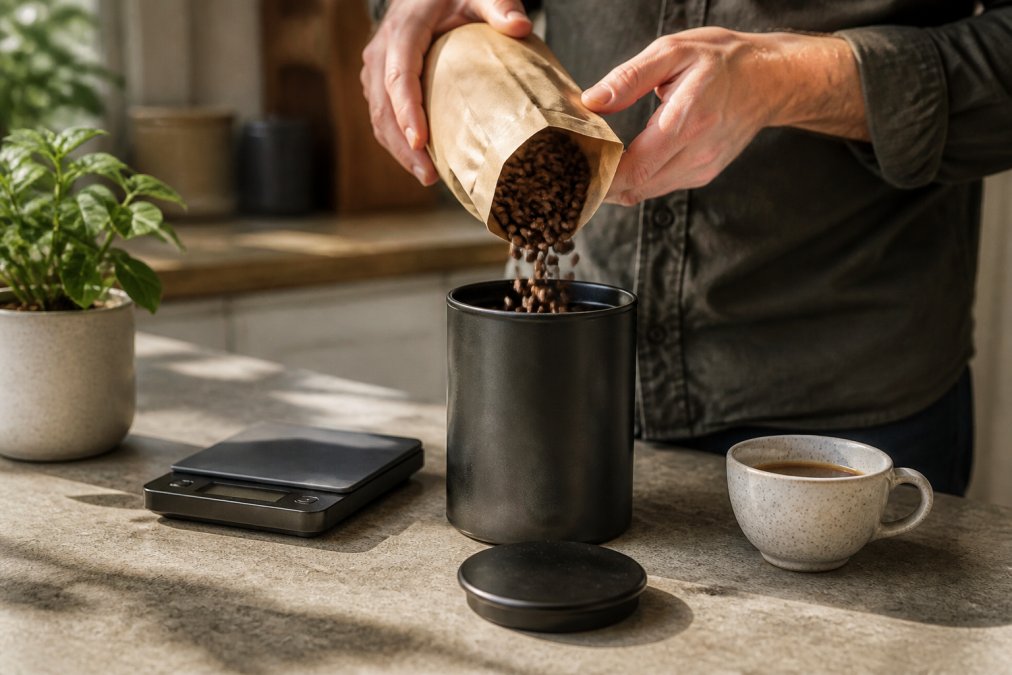
Step 1: Keep Beans in the Original Bag Until You Open It
Most quality roasters pack beans in bags with a one-way valve that lets carbon dioxide escape without letting oxygen in. Leave the bag sealed until you brew, and check the roast date before you buy, it tells you more than a "best by" date ever will.
Step 2: Transfer to an Airtight, Opaque Container
Once opened, move beans into an airtight, opaque container with a tight seal, skip clear glass jars on open shelves, since light alone can dull flavor within days. Fill it close to the top; less air means less oxygen exposure.
Step 3: Store at Room Temperature, Away From Heat and Light
Room temperature, roughly 60-75°F, is the sweet spot. Keep the container in a dark cabinet, away from the oven, dishwasher, and any heat source. Refrigeration backfires: every time you pull the container out, condensation forms on the beans, and that moisture does more damage than the cool air helps.
How Long Does Organic Coffee Stay Fresh?
Organic coffee stays at peak freshness for about 1-2 weeks after the roast date, then holds decent quality for roughly 3-6 weeks when stored well.
Peak Freshness vs. Shelf Life by Roast Level
Darker roasts lose their edge sooner because roasting brings more oils to the surface, where oxygen reaches them first.
| Roast Level | Peak Freshness | Good Quality Window | Best Storage Note |
|---|---|---|---|
| Light roast | 7-14 days | 4-6 weeks | Sealed container, cool cabinet |
| Medium roast | 7-12 days | 3-5 weeks | Airtight, opaque, room temp |
| Dark roast | 5-10 days | 2-4 weeks | Small batches, tight seal |
Best Coffee Storage Canisters for Organic Beans
The best coffee storage canisters block air, light, and heat, but "airtight and opaque" is not enough, material, seal type, valve design, and interior volume all change how fast beans fade:
- Opaque walls: block light completely. UV and visible light accelerate oil breakdown, so a clear jar on an open shelf can dull flavor within days even with a perfect seal.
- Silicone or rubber gasket: creates a true hermetic seal. A lid that merely twists on without a gasket lets air exchange with every temperature swing.
- One-way valve: lets carbon dioxide out and keeps oxygen from flowing back in, which matters most in the first 7-10 days after roasting. Without one, pressure can push the lid loose or trapped gas creates a stale, flat cup.
- Right size: match batch size so there is little headspace, a 32-ounce canister holding 8 ounces of beans leaves roughly 24 ounces of air against them. Fill to within an inch of the lid.
- Easy to clean: residual oils go stale and taint the next batch. Wash with warm water and mild unscented soap, then dry completely; lingering soap scent migrates into the beans.
Material-by-Material Breakdown
Stainless steel rates highest for most kitchens: it blocks light completely, resists odor absorption, and holds a steadier temperature than glass or plastic. The trade-off is you cannot see the beans, so track your roast date separately.
Sizing Your Container to Your Roast Level
Roast level changes how much gas beans release and how fast they age, so it should change how you size and seal your container.
- Light roasts degas more slowly and hold up longer, so a slightly larger container with more headspace is tolerable.
- Dark roasts degas fast and lose their edge sooner because roasting brings more oils to the surface. Use a smaller container, fill it nearly to the top, and finish the batch within 2-4 weeks.
one-way valve degassing explanation
Storing Coffee in the Freezer: When It Works and When It Backfires
Freezing coffee works only if you seal beans airtight and never thaw them repeatedly. Done right, it pauses aging for months; done wrong, it causes freezer burn and condensation. Three variables decide the outcome: portion size, seal quality, and thaw discipline.
Why Freezing Works at All
Cold temperatures slow the reactions that break down coffee oils, and oxidation and aroma loss both slow dramatically below freezing. The catch is moisture: freezer air is dry, and any air left in your container pulls moisture out of the beans over time. That is freezer burn, pale, dry patches and a flat, papery cup.
How to Freeze Beans Without Ruining Them
- Portion beans into single-use batches, what you brew in 5-7 days, usually 8-12 ounces of whole beans.
- Seal each portion in a vacuum seal bag or freezer-safe airtight container, squeezing out as much air as you can.
- Label each with the roast date, not the freeze date, so you know how much life the beans had going in.
- Freeze immediately, before the beans age further at room temperature.
- Pull one portion at a time and let it come to room temperature before opening, since opening a cold bag lets humid kitchen air rush in and condense on the beans.
The key rule: never refreeze. Each thaw cycle pulls moisture onto the beans, starting freezer burn and stale flavor.
The Thaw Protocol Most Guides Skip
How you thaw matters as much as how you freeze. Opening a bag right away is exactly when condensation forms. Instead:
- Leave the sealed portion on the counter for 30-60 minutes, until it reaches room temperature.
- Do not open the bag until fully thawed; the seal keeps moisture out during the temperature change.
- Once opened, treat the beans like a fresh bag and give them a few minutes to breathe before grinding.
- Grind right before brewing, since thawed beans stale at the same rate as room-temperature beans.
When Freezing Backfires
Freezing hurts more than it helps in a few common situations:
- You freeze a large bulk bag and reopen it repeatedly. Every opening pulls in moist air, so portion first.
- You use a thin plastic bag with air still inside. That is a freezer-burn setup.
- You thaw and refreeze. Each cycle degrades the oils and adds moisture.
- You freeze beans that were already stale. Freezing pauses aging; it does not reverse it.
Troubleshooting a Failed Storage Setup
If you are not sure whether your storage method is working, look for these signs before you blame the roast:
- Condensation inside the bag or container. Temperature swings are pulling water onto the beans, so move the container to a steadier spot.
- Beans that feel soft or spongy. Fresh beans are hard and brittle; softness means absorbed moisture.
- A flat, papery smell when you open the container. That is oxidation, not a bad roast.
- Oily, shiny beans that were not oily at purchase. Heat or light has pushed oils to the surface.
Storage Mistakes That Quietly Ruin Organic Beans
Most storage failures trace back to a handful of habits. A common mistake is topping off an old container with fresh beans, the old oils go stale and pull the new batch down with them.
Other quiet killers:
- Storing beans in the fridge "just to be safe"
- Leaving the bag open between brews
- Using a clear jar on a bright counter
- Buying more than you can drink in a month
- Skipping the roast date and trusting a "best by" label
How Altitude and Humidity Change Your Storage Plan
Altitude and humidity change how fast beans age. High humidity speeds moisture absorption; low humidity dries beans out and dulls the oils.
Frequently Asked Questions
What's the best way to store coffee beans to keep them fresh?
Keep whole beans in an opaque, airtight container at room temperature, away from the stove, oven, and direct sunlight. A container with a one-way valve lets carbon dioxide escape while keeping oxygen out. Buy in small batches so you finish a bag within two to four weeks of the roast date, and grind right before brewing. Whole beans hold their aroma far longer than pre-ground coffee because less surface area is exposed to oxygen.
How long does organic coffee stay fresh after opening?
Whole organic beans hit peak flavor about 4 to 7 days after roasting, then hold good quality for roughly 2 to 4 weeks in an airtight container at room temperature. After that, oxidation and lost volatile compounds flatten the aroma and flavor profile. Dark roasts fade faster than medium or light roasts because their porous structure releases oils and gases more quickly. Check the roast date, not just the expiration date.
Is it better to store coffee beans in glass or stainless steel?
Both work if the container is airtight and blocks light. Stainless steel is fully opaque and durable, so it protects beans from light exposure without any extra effort. Glass lets you see how much is left, but clear glass must be kept in a dark cabinet or the beans will degrade from UV light. Whichever you pick, look for a tight-fitting lid or hermetic seal, and skip containers that let air leak in.
Should organic coffee beans be kept in the refrigerator?
No. A refrigerator cycles through temperature and humidity changes every time the door opens, and beans absorb moisture and nearby food odors easily. Condensation on cold beans also accelerates staling. For daily use, room temperature storage in an airtight container is best. The freezer is a better option for long-term storage, but only if you portion beans into sealed bags and let them thaw fully before grinding.