
Last Updated: October 27, 2026
Quick Summary
Organic coffee is better quality because certification guarantees how the coffee was farmed, not how it was graded, roasted, or stored. Blind tastings often end in a draw once origin, processing, roast, and freshness are matched, so judge coffee by cup quality rather than the seal alone.
- USDA Organic certification verifies soil management, pest control, and separation of organic from conventional crops.
- Organic farming prohibits synthetic pesticides and fertilizers and requires documented separation from conventional crops.
- Buy a small bag of unfamiliar coffee first, taste it, then commit to a larger purchase.
- At Smokin Java, every batch is roasted the day it ships, including organic single-origin coffees.
- Bali Blue and Mexico are both organic, offering dark chocolate, molasses, and brown sugar or chocolate, cinnamon, and green apple.
Table of Contents
- What Organic Coffee Actually Means for Quality
- Organic Coffee vs. Regular Coffee: The Real Differences
- Does Organic Coffee Taste Better? What Blind Comparisons Show
- USDA Organic Coffee Certification: How to Verify the Label
- Health Claims and Their Limits: What the Evidence Supports
- How to Choose Organic Coffee Beans That Deliver on Quality
- Order Fresh-Roasted Organic Beans From Smokin Java
- Frequently Asked Questions
What Organic Coffee Actually Means for Quality
That definition matters because it separates two questions people constantly blur: whether a coffee was grown responsibly, and whether it tastes good in your cup.
At Smokin Java, we source organic beans from renowned regions across the globe and roast each batch upon order.
Organic Coffee vs. Regular Coffee: The Real Differences
What organic farming does not guarantee is a better roast or a fresher bag. If you're wondering why artisan coffee is more expensive, the real costs are broken down here. A poorly stored organic bean will taste worse than a well-handled conventional one. That's why we treat certification as a floor, not a finish line.
Does Organic Coffee Taste Better? What Blind Comparisons Show
Honest answer: the evidence is mixed, and anyone who tells you organic coffee always wins a blind tasting is overselling. In side-by-side comparisons, tasters often struggle to identify which cup is organic when both samples are roasted to the same level and brewed identically. That result is not an argument against organic farming, it is an argument for defining quality precisely before you compare.
What 'Better Quality' Actually Means in Measurable Terms
Organic certification sits outside that list. It tells you how the coffee was farmed, not how it was graded, roasted, or stored. A certified-organic lot with high defect counts and a stale roast date will lose to a well-handled conventional lot every time.
What Controlled Comparisons Actually Control
That is why blind tastings so often end in a draw. Once origin, variety, processing, roast, and freshness are matched, the farming method's influence on the cup is subtle and farm-specific. Slower cherry development under shade and healthier soil biology can support denser beans and more consistent sugars, but those outcomes depend on the farm, the season, and the harvest, not on the seal alone.
The Variables Worth Optimizing First
The practical takeaway: judge coffee by cup quality, not by the seal. If you want to understand how roasting timing shapes aroma, our piece on fresh roasting and aroma explains what happens to beans in the days after the roast.
Blind comparisons come down to a handful of variables, and organic certification is not one of them.
| Factor | What it tells you | Effect on cup quality |
|---|---|---|
| Organic certification | How the coffee was farmed | Outside grading, roasting, and storage |
| Origin and variety | Where and what was grown | Matched in controlled comparisons |
| Processing method | How the cherry was handled | Matched in controlled comparisons |
| Roast level | How the bean was roasted | Matched in controlled comparisons |
| Freshness | How the bean was stored | Matched in controlled comparisons |
| Defect count | How the lot was graded | High defects lose to well-handled conventional |
USDA Organic Coffee Certification: How to Verify the Label
USDA Organic coffee certification is a verification system, not a marketing phrase. Products labeled organic in the United States must meet the USDA National Organic Program standards, which cover soil management, pest control, and the separation of organic from conventional crops.
Health Claims and Their Limits: What the Evidence Supports
The honest position on organic coffee and health is narrower than the marketing suggests, and the most useful thing a buyer can do is separate three different questions that get blended together: what is in the bean, what survives roasting and brewing, and what human studies actually show.
What Is Established
Coffee itself, organic or conventional, contains chlorogenic acids and other polyphenols, plus minerals such as magnesium and potassium. Those compounds are present regardless of farming method, and moderate coffee consumption is widely recognized as compatible with a normal diet for most adults. What organic farming changes is the input side of the supply chain: it prohibits synthetic pesticides and fertilizers and requires documented separation from conventional crops.
What Roasting and Brewing Do and Do Not Remove
The practical implication is that 'organic' and 'healthy' are not synonyms, and 'roasted' does not mean 'residue-free.' A carefully sourced organic bean drowned in sugar and cream is a different nutritional proposition than a black cup. Judge the whole drink, not just the certification.
What the Research Supports, and What It Does Not
So we will not tell you organic coffee will transform your health. We will tell you it removes a category of synthetic chemical input from the supply chain, and that is a defensible reason to choose it, provided you hold the health claims to the same evidence standard you would apply to any other food.
How to Read a Health Claim on a Coffee Bag
If you want a starting point, our single-origin organic lots are roasted to order.
How to Choose Organic Coffee Beans That Deliver on Quality
A common mistake is buying a large bag of an unfamiliar coffee to save money. Buy small first, taste it, then commit. If you'd rather have someone curate that first step for you, this guide to the best organic coffee subscription covers how to evaluate one before signing up.
Order Fresh-Roasted Organic Beans From Smokin Java
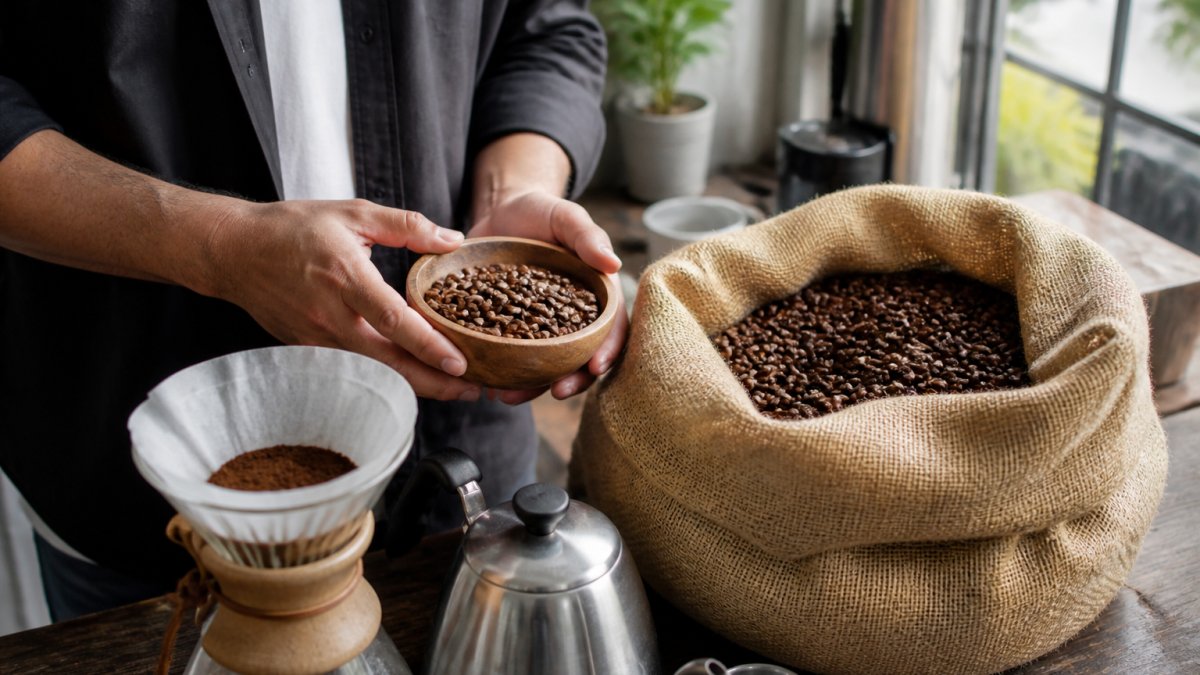
Every batch is roasted the day it ships. We offer single-origin coffees.
If you want a starting point, the Bali Blue offers dark chocolate, molasses, and brown sugar, and the Mexico offers chocolate, cinnamon, and green apple. Both are organic.
Frequently Asked Questions
Is organic coffee healthier than regular coffee?
Organic coffee limits exposure to synthetic pesticides used in conventional farming, which matters if you drink several cups a day. That said, the evidence for larger health benefits is thinner than most marketing suggests. Organic beans do contain antioxidants, magnesium, and potassium, but conventional coffee contains these too. The clearer advantage is lower chemical residue exposure and farming practices that protect soil and water. Treat health claims as a modest bonus, not the main reason to buy.
Does organic coffee taste better than conventional coffee?
Not automatically. Taste depends on growing conditions, bean quality, harvest timing, processing, and roast date far more than on the organic label. Shade-grown organic beans often develop slowly, which can concentrate sugars and produce fuller flavor, and blind comparisons sometimes favor them. But a stale organic bag will lose to a fresh conventional one every time. Check the roast date and origin before you assume the certification guarantees flavor.
What does the USDA Organic label mean on coffee?
The USDA Organic seal means the coffee was grown without synthetic pesticides or fertilizers and processed under verified standards, with traceability from farm to roaster. Certification requires an accredited certifier to inspect the operation annually. Look for the seal plus a certifier name on the bag. A bag that says organic without the seal or a verifiable certifier is making a claim you cannot check, which is a quality red flag.
How can I tell if organic coffee is high quality before buying?
Smokin Java's Bali Blue is a single-origin organic coffee grown at 1200-1600 meters.
The hardest part of buying organic coffee is trusting that the certification, the roast date, and the origin story all hold up when the bag arrives. We'd rather you judge us on the cup. Start with a sample pack of our best-selling single origins or go straight to the Costa Rica lot and taste what fresh-roasted, certified organic coffee actually delivers.
