

Table of Contents
- The Peak Freshness Window: What the Calendar Actually Says
- Coffee Roast Date vs Expiration Date: Which One Tells the Truth?
- The Best Way to Store Coffee Beans for Lasting Flavor
- Signs of Stale Coffee Beans You Can Spot Before Brewing
- How Long Does Roasted Coffee Stay Fresh in the Freezer?
- Roast Profiles, Degassing, and the Timelines Nobody Explains
- Frequently Asked Questions
Last Updated: September 18, 2026
The Peak Freshness Window: What the Calendar Actually Says
Roasted coffee stays fresh for roughly two to six weeks after the roast date, depending on how it is stored and how it is brewed. That window is not a marketing slogan; it is a countdown that starts the moment beans leave the roaster. This guide from Smokin Java breaks down how long does roasted coffee stay fresh in real conditions, from a sealed bag on the counter to a vacuum container in the freezer.
Why Roast Date Matters More Than Any Other Number
Roast date is the day the beans finished roasting, and it is the only date that tells you how fresh the coffee actually is. A "best by" stamp can sit a year out from packaging. The roast date is a fixed point you can count from.
U.S. Department of Agriculture guidance on food date labeling
Coffee Roast Date vs Expiration Date: Which One Tells the Truth?
The roast date tells the truth about freshness. The expiration date tells you the last day a retailer considers the product sellable, which is a different question entirely.
The Best Way to Store Coffee Beans for Lasting Flavor
The best way to store coffee beans is in an airtight, opaque container kept away from heat, light, and moisture, at room temperature, and used within a few weeks. Whole beans, not ground. Small batches, not a bulk bag you open daily.
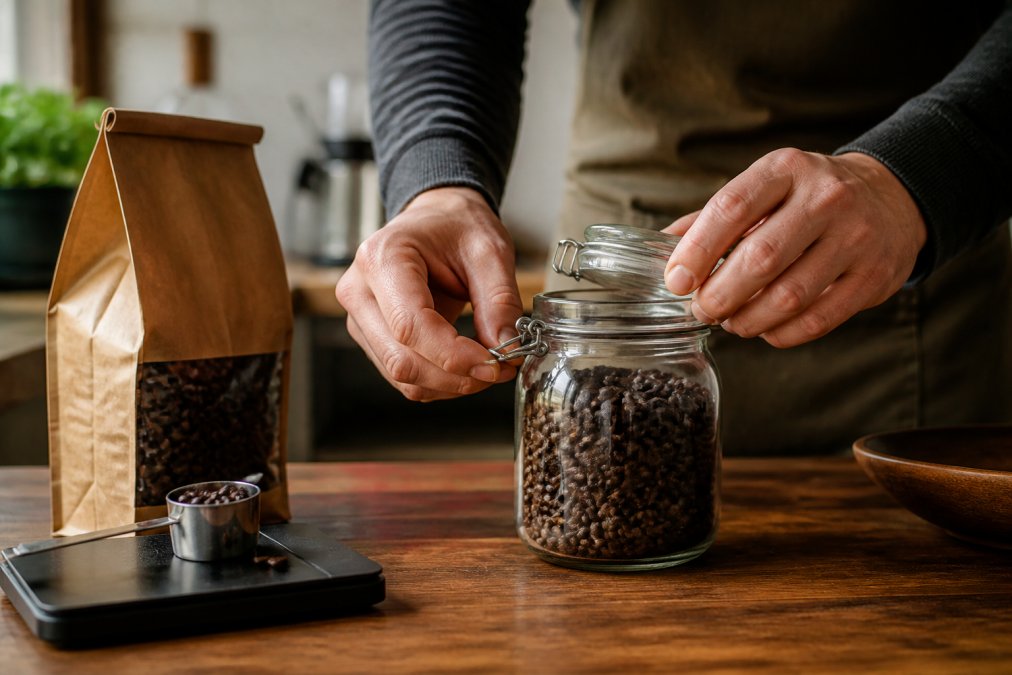
The Four Enemies: Oxygen, Light, Heat, and Moisture
Oxygen is the biggest one. It reacts with coffee oils and drives oxidation, the same process that turns butter rancid. Light accelerates that breakdown, which is why clear bags and glass jars on a sunny shelf are a poor choice.
Signs of Stale Coffee Beans You Can Spot Before Brewing
Signs of stale coffee beans show up before you ever taste them if you know what to look for. The most reliable one is smell: fresh beans hit you with a distinct, sweet, roasty aroma the moment you open the bag. Stale beans smell flat, papery, or faintly like cardboard.
Other signals:
- No bloom. Pour hot water over fresh grounds and they swell and bubble as trapped carbon dioxide escapes. Flat, still grounds have already degassed.
- Oily, darkened surface. A light sheen is normal on darker roasts. A heavy, greasy film on beans that used to look matte usually means the oils have oxidized.
- Dull, bitter, or hollow cup. Stale coffee tastes flat and woody. It loses the sweetness and acidity that made it interesting.
- Weak body. The brew runs thin no matter how you adjust the ratio.
Specialty Coffee Association guidance on coffee freshness and storage
How Long Does Roasted Coffee Stay Fresh in the Freezer?
Frozen coffee stays fresh for two to three months when stored properly, and some roasters argue for longer. Cold storage slows oxidation dramatically, which is why it works. The catch is that it only works if you control moisture.
Why the Freezer Beats the Pantry, and the Fridge
The three storage environments are not interchangeable:
- Room temperature (pantry): Oxidation proceeds at its normal rate. This is your baseline two-to-four-week window for whole beans.
- Refrigerator: Cold enough to feel like progress, not cold enough to actually slow oxidation meaningfully, and every door opening cycles humid air across the beans. The fridge is the worst of both worlds, no real preservation benefit, plus moisture and odor exposure. Skip it.
- Freezer: Cold enough to genuinely slow the chemical reactions that cause staling. This is the only cold option that earns its keep.
The reason the freezer works is temperature. Oxidation and oil breakdown are chemical processes, and chemical processes slow as temperature drops. Freezing does not stop staling, it slows it enough to buy you weeks or months instead of days.
The Moisture Problem, Explained
Freezer burn is the enemy here. It happens when air reaches the beans and pulls moisture out, leaving them dry, dull, and papery. The fix is simple: squeeze out as much air as possible, seal tightly, and use a container that will not let odors in.
How to Portion and Thaw Without Wrecking the Bag
Freeze whole beans, never ground. Ground coffee exposes far more surface area to oxygen and moisture, and it degrades in days even in the freezer. Portion beans into single-use bags or small jars so you thaw only what you will brew.
A few rules that matter:
- Portion by the brew, not by the week. A single 12-ounce batch per bag means you never open a bag twice.
- Press out air before sealing. A vacuum sealer helps, but a zip-top bag with the air squeezed out is far better than a loose bag.
- Never refreeze. Each thaw-and-refreeze cycle pushes moisture in and out of the bean.
- Label the bag with the roast date so you actually know what you are drinking.
- Keep the freezer clean of strong odors. Coffee oils absorb what is around them, and a bag next to frozen fish will taste like it.
A Quick Sensory Check on Thawed Beans
You do not need a lab to tell whether frozen beans survived. Smell the bag the moment you open it, fresh beans hit you with a sweet, roasty aroma, while beans that took on moisture smell flat, papery, or faintly cardboard-like. Then brew a small cup and taste for sweetness before you commit the whole portion. If the bloom is weak and the cup runs thin, the beans picked up moisture somewhere in the cycle.
Roast Profiles, Degassing, and the Timelines Nobody Explains
Degassing is the release of carbon dioxide that beans trap during roasting, and it is the reason a just-roasted bag tastes flat and foamy rather than sweet. Beans need to rest for a few days after roasting before they hit their peak. Brew them too soon and the escaping gas fights your extraction.
Why Light and Dark Roasts Age at Different Rates
The mechanism is porosity. Roasting drives off moisture and fractures the bean's cell structure. The longer and hotter the roast, the more those internal walls break down, and the more porous the finished bean becomes.
- Light roasts are denser and retain more of their original cell structure. Less internal surface area is exposed to oxygen, so the oils oxidize more slowly. They also carry more of the delicate, volatile acids and aromatic compounds that define their flavor, which is a double-edged sword, because those same compounds are the first thing you lose.
- Dark roasts are more porous and have already pushed oils to the bean surface during roasting. That surface oil is directly exposed to oxygen the moment the bag is opened, so rancidity and flatness arrive sooner. The trade-off is that dark roasts start out with bolder, more caramelized flavors that mask early staling, you notice the decline later, but it happens faster.
The Rest Window by Roast Level
Degassing is not a fixed three-day event. It tracks roast level the same way aging does:
- Light roasts degas slowly and may need four to seven days of rest before they hit peak. Brewing them at day two often yields a thin, gassy, underdeveloped cup.
- Medium roasts tend to peak around three to five days off the roast.
- Dark roasts degas fast and can be ready in as little as one to two days, but they also begin declining sooner, so the rest window and the peak window nearly overlap.
What This Means for Your Storage Plan
Match your buying and storage habits to the roast you actually drink:
- If you favor dark roasts, buy smaller quantities more often and prioritize an airtight, opaque container. You have less margin for a bag that sits open on the counter.
- If you favor light roasts, you have a little more slack on the back end, but be patient on the front end, give them the full rest before you judge them.
- If you freeze, portion by roast level. A dark roast pulled from the freezer at week three is further along than a light roast pulled at the same point.
| Storage Method | Whole Bean | Ground Coffee | Best For |
|---|---|---|---|
| Original valve bag, room temp | 2-4 weeks | 3-7 days | Daily drinkers |
| Airtight opaque canister | 2-4 weeks | 3-7 days | Small kitchens |
| Vacuum-sealed, room temp | 4-6 weeks | 1-2 weeks | Slower drinkers |
| Freezer, sealed and portioned | 2-3 months | Not recommended | Stocking up |
Frequently Asked Questions
Is coffee roasted 4 months ago still good?
It is safe to drink, but the flavor has dropped off considerably. Roasted coffee hits peak flavor between 4 and 14 days after the roast date, and most of the volatile compounds that create aroma fade within 6 to 8 weeks if the beans sit in a pantry. At 4 months, you will likely taste flat, papery notes instead of the original flavor profile. If the beans were frozen in an airtight container, they can hold up longer, but a 4-month-old bag stored at room temperature is past its best.
What are the clearest signs of stale coffee beans?
The signs of stale coffee beans show up before you brew. Whole beans lose their glossy sheen and smell dull instead of fragrant. Ground coffee clumps and smells like cardboard or sawdust. When you brew, the coffee tastes flat, sour, or papery, and the aroma that normally fills the kitchen is missing. Another giveaway: fresh beans bloom and bubble when hot water hits them because they still release carbon dioxide. Stale beans barely react.
Does freezing coffee beans extend their shelf life?
Yes, when done correctly. Cold storage slows oxidation and preserves volatile compounds, so beans can stay near peak flavor for 1 to 2 months in a standard freezer and longer in a deep freezer. The catch is moisture. Use an airtight container or vacuum seal, keep the beans whole, and never thaw and refreeze. Taking beans out, letting them warm up, and putting them back introduces condensation, which causes freezer burn and dulls the flavor.
Can I drink coffee that expired 2 years ago?
It will not make you sick, but it will not taste like coffee either. Oxidation and moisture exposure break down the coffee oils and volatile compounds that carry flavor, leaving behind a flat, musty cup. Two-year-old coffee is safe in the sense that it is dry and shelf-stable, but the sensory experience is gone. If you find an old bag, use it for compost or as a fridge deodorizer instead of brewing it.
The hard part is not knowing the numbers; it is buying coffee that arrives fresh enough for those numbers to matter. Most bags on a shelf were roasted weeks before you saw them, and no storage trick fixes a clock that already ran out. Smokin Java roasts to order, sources organic beans through ethical partnerships with farmers, and ships in eco-friendly packaging, so your first cup lands inside the peak window. Add to cart and taste what fresh actually means.