

Table of Contents
- What Small Batch Roasted Coffee Actually Means
- Flavor Clarity and Roast Profile Development
- Freshness and Shelf Life: The Roastmaster's Advantage
- How to Store Freshly Roasted Coffee for Maximum Quality
- Understanding the Coffee Degassing Process Explained
- Precision Control and Batch Consistency
- Buy Freshly Roasted Organic Coffee Online: Quality and Sustainability
- Frequently Asked Questions
Last Updated: September 23, 2026
What Small Batch Roasted Coffee Actually Means
Small batch roasted coffee is roasted in limited quantities using smaller drums rather than massive industrial equipment. At Smokin Java, we roast each batch upon order, ensuring maximum freshness and flavor precision that mass-produced coffee cannot match.
Small batch roasting allows precise control of heat, airflow, and bean development, ensuring consistent thermal energy and flavor development. Commercial roasters prioritize speed and volume over individual batch quality.
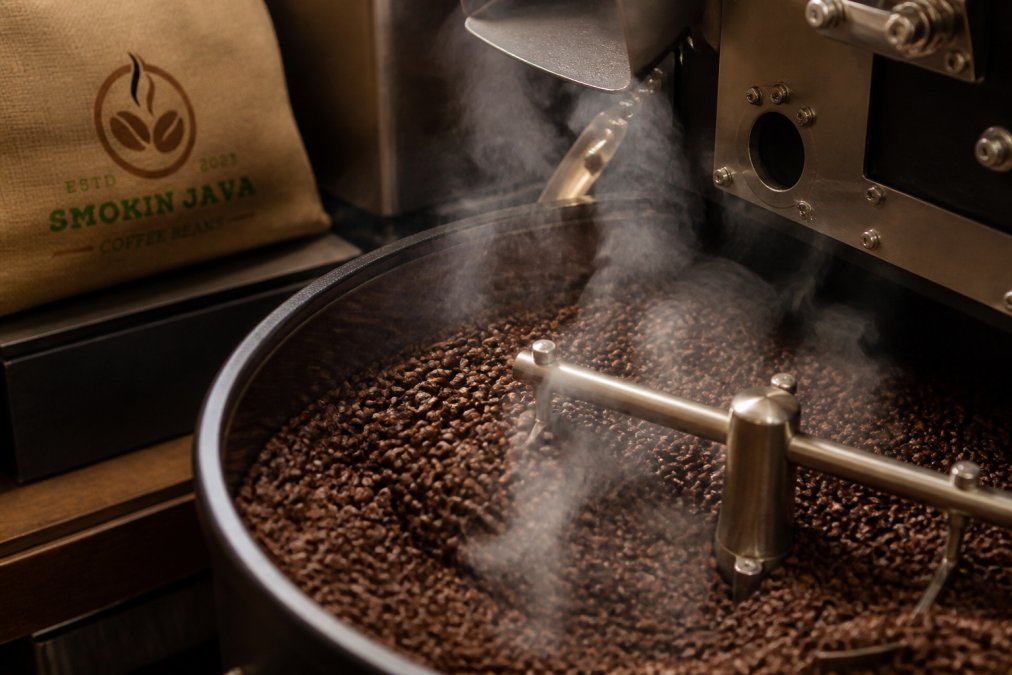
Small batch roasters inspect green beans carefully and adjust strategy by origin, resulting in cleaner, more intentional coffee than supermarket alternatives.
Flavor Clarity and Roast Profile Development
Flavor clarity in small batch roasted coffee comes from precise control of two chemical transformations: the Maillard reaction and caramelization. These create hundreds of flavor compounds that define taste. Small batch roasters control temperature and duration precisely, allowing reactions to develop fully and evenly.
The Maillard reaction (starting around 300°F) creates savory flavors like nutty and chocolate notes. Caramelization (above 320°F) breaks down sugars into bitter-sweet, smoky, and fruity compounds. Heat timing determines which flavors dominate.
Industrial roasters cannot adjust mid-roast for variations in moisture or density, resulting in uneven development where some beans are under-roasted and others over-roasted. This muddies flavor and obscures the origin's terroir.
Small batch drums hold 5-25 pounds versus industrial 300+ pounds per cycle. This allows roastmasters to monitor temperature, adjust drum speed and airflow in real time, and pull sample beans mid-roast. They can reduce heat if roasting too quickly or increase it if lagging, ensuring uniform development.
The roast profile, temperature curve over time, unlocks flavors tailored to each origin. Ethiopian beans with floral notes are roasted lighter to preserve delicacy, while Brazilian beans with chocolate notes are roasted longer to deepen them.
Precision matters because inconsistent heat causes undesirable compounds. Chlorogenic acid (bitter, astringent) must break down at the right temperature curve. Small batch roasting allows reactions to develop fully and in balance.
A properly developed small batch roast reveals nuances in aroma, body, and finish that showcase terroir. A Peru single origin might reveal salted caramel and citrus notes lost in commercial roasts where throughput trumps individual flavor development.

Freshness and Shelf Life: The Roastmaster's Advantage
Freshness is the biggest advantage of small batch roasted coffee. Store-bought coffee is often weeks or months old with significant flavor degradation. Small batch roasting to order eliminates this problem.
Coffee peaks 5-14 days after roasting, when degassing is complete but oxidation hasn't begun. Coffee older than a month tastes flat and stale regardless of roast quality.
Small batch coffee shipped the day it's roasted arrives at peak freshness with all aromatic and flavor compounds intact, unlike retail shelf coffee of unknown age.
Shorter shelf life is a quality sign. Small batch roasted coffee remains excellent for 2-3 weeks after roasting, unlike commercial coffee artificially extended with nitrogen flushing.
How to Store Freshly Roasted Coffee for Maximum Quality
Store freshly roasted coffee in an airtight container away from light, heat, moisture, and air to preserve flavor clarity and aroma.
Use a resealable bag with a one-way valve or airtight glass jar in a dark cabinet. The valve allows CO2 to escape while blocking oxygen. Avoid refrigerators and freezers, which accelerate degradation.
Store in a cool, dark pantry or cabinet at room temperature. Use within 2-3 weeks of opening. Grind only what you need per brew to minimize air exposure.
Whole bean lasts longer than ground coffee. Invest in a burr grinder and grind fresh for each brew to maximize flavor potential.
Understanding the Coffee Degassing Process Explained
Degassing is a natural process that begins immediately after roasting and continues for several days. During roasting, carbon dioxide builds up inside the coffee bean. After roasting stops, the beans release this CO2 gradually. Understanding this process helps explain why freshly roasted coffee tastes different on day one versus day seven.
In the first 24-48 hours after roasting, degassing is most active. The beans are still releasing significant amounts of CO2, which can actually interfere with proper extraction if you brew too soon. Many specialty coffee enthusiasts wait 3-5 days after roasting before brewing for this reason, it allows the degassing process to progress far enough that the coffee extracts evenly and cleanly.
By day 5-7, degassing has slowed considerably, and the coffee enters its optimal flavor window. This is when the beans have released enough CO2 that they won't cause channeling or uneven extraction, but they haven't yet begun the oxidation process that dulls flavor. This window lasts roughly 2-3 weeks, depending on storage conditions.
The degassing process is why one-way valves on coffee bags are so important. They allow CO2 to escape while preventing oxygen from entering. Without this valve, pressure would build up inside the bag, or oxygen would seep in and accelerate staling. Small batch roasters understand the importance of proper degassing, which is why quality bags always include this feature.
Precision Control and Batch Consistency
Precision roasting is what separates small batch operations from industrial facilities, and the difference begins with equipment. Most specialty small batch roasters use drum roasters, cylindrical rotating drums heated from below or around the sides, typically in the 5-25 pound capacity range. These machines allow the roastmaster to control three critical variables in real time: drum temperature, drum speed (RPM), and airflow through the roasting chamber.
A drum roaster's design enables what industrial roasters cannot: mid-roast intervention. As beans roast, they change color and density, releasing moisture and CO2. The roastmaster monitors these changes by listening to the sound of the roast (the "first crack" and "second crack" are audible cues that mark chemical milestones), watching the bean color through a small window, and occasionally pulling a sample bean to assess internal development. If the roast is progressing too quickly, say, reaching first crack before the intended time, the roastmaster can reduce the heat input or increase airflow to slow the process. If it's lagging, they can increase heat or reduce airflow. This responsiveness is impossible in automated industrial systems, which follow a fixed program regardless of batch-to-batch variation in green coffee.
Industrial roasters, by contrast, use large-capacity machines (often 300+ pounds per batch) designed for consistency through standardization, not flexibility. They rely on precise pre-roasting bean sorting, strict environmental controls, and automated temperature curves. While these systems are sophisticated, they sacrifice the adaptability needed to adjust for variations in green coffee bean quality, seasonal differences in moisture content, or the unique characteristics of a particular origin. If a shipment of beans is slightly denser or drier than the last shipment, an industrial roaster cannot easily recalibrate; it simply runs the same program and accepts the variance in output.
Small batch roasters also benefit from direct sensory feedback. A skilled roastmaster develops an intuitive understanding of how a specific origin behaves. They know that Ethiopian naturals (beans dried in the fruit) tend to roast faster than washed coffees, so they adjust their approach accordingly. They recognize that high-altitude beans are often denser and require longer roasting times to fully develop. They can taste the coffee as it roasts, literally cupping a sample mid-roast, and make decisions based on flavor development, not just temperature or time.
This consistency matters because it builds predictability and trust.
Buy Freshly Roasted Organic Coffee Online: Quality and Sustainability
When you buy freshly roasted organic coffee online, you're supporting a supply chain built on sustainability and ethical partnerships. Small batch roasters typically source from specialty coffee suppliers who work directly with farming cooperatives, ensuring fair prices and sustainable growing practices.
Frequently Asked Questions
What does small batch roasted coffee mean?
Small batch roasted coffee refers to beans roasted in limited quantities, typically 5-25 pounds per roast, allowing roastmasters to apply precise heat application and monitor each batch individually. Unlike automated commercial systems that process hundreds of pounds simultaneously, small batch roasting enables careful attention to roast profile development, ensuring beans reach their optimal flavor clarity. This method prioritizes quality control over volume, resulting in more consistent, flavorful cups with better aroma profile and sensory experience.
How long should you wait to drink freshly roasted coffee?
Freshly roasted coffee should typically rest for 12-24 hours after roasting to allow the degassing process to begin. During this time, carbon dioxide trapped inside the beans escapes, which improves extraction and flavor clarity when you brew. Waiting too long, however, reduces freshness, ideally, consume your coffee within 2-4 weeks of the roast date for peak aroma profile and taste. Small batch roasted coffee roasted to order ensures you receive beans at their prime window, maximizing both degassing benefits and overall freshness.
Is small batch coffee actually fresher than store-bought?
Yes. Small batch roasted coffee roasted to order ships within days of roasting, while store-bought beans may have been roasted weeks or months prior. Commercial roasting facilities often roast large volumes weeks in advance for distribution, causing beans to lose aromatic compounds and flavor clarity over time. Small batch roasters prioritize freshness by roasting upon customer order, delivering beans at peak freshness to your door. This direct model eliminates warehouse storage time, ensuring superior sensory experience and shelf life compared to retail coffee.
How does roasting batch size affect coffee flavor?
Smaller batch sizes allow roastmasters to apply consistent, precise heat application throughout the roast, developing complex flavor notes and clarity that large automated batches cannot achieve. In small batch roasting, beans receive uniform thermal energy exposure, enabling better bean development and caramelization control. Commercial roasting's high-volume approach prioritizes speed over precision, often resulting in inconsistent roast degrees and muted flavor profiles. Small batches also allow roastmasters to identify and remove bean defects before roasting, ensuring only quality beans contribute to the final cup's aroma profile and taste.