

Table of Contents
- Freshly Roasted vs Store Bought Coffee: The Core Differences
- The Coffee Degassing Period: Why Fresh Beans Need Time to Rest
- How Roast Level and Packaging Affect Shelf Life
- How to Store Coffee Beans for Maximum Freshness
- The Real Cost: Economic Value Analysis of Fresh vs Store Bought Coffee
- How to Buy Freshly Roasted Organic Coffee Online
- Frequently Asked Questions
Last Updated: September 25, 2026
Freshly Roasted vs Store Bought Coffee: The Core Differences
Freshly roasted vs store bought coffee comes down to one thing: time. Coffee starts losing its best qualities the moment it leaves the roaster, and most grocery store bags have been sitting for months before you ever open them. At Smokin Java, we roast each batch to order, which means the beans in your bag are days old, not months.
Why Oxidation and Staling Change Everything
Oxidation is the chemical reaction that turns coffee stale. Oxygen in the air reacts with oils and aromatic compounds on the bean surface, and the result is a flat, papery, sometimes cardboard-like taste. The Specialty Coffee Association's freshness guidance notes that most coffees hit their peak flavor within days of roasting and decline steadily after that.
What the Bag Is Really Telling You
The roast date is the single most useful number on any coffee package, more important than the best-by date. A best-by date tells you when the roaster thinks the coffee is no longer worth drinking, which can be many months out. A roast date tells you exactly how old the coffee is.
Look for:
- A printed roast date, not just a best-by date
- Packaging with a one-way degassing valve
- Opaque material that blocks light
- Origin and roast level information
The Coffee Degassing Period: Why Fresh Beans Need Time to Rest
The coffee degassing period is the window right after roasting when beans release carbon dioxide. This usually takes three to seven days for most roasts. Brew too soon and the CO2 interferes with water contact, which throws off extraction and produces a thin, uneven cup.
The Resting Period Paradox: Too Fresh Can Taste Flat
Here's the counterintuitive part most guides skip: coffee that is only a day or two off the roast often tastes worse than coffee that has rested for a week. The beans are still pushing out so much gas that hot water can't fully saturate the grounds. Baristas call this gassy coffee, and it tends to taste sour or hollow.
How Roast Level and Packaging Affect Shelf Life
Roast level changes how long coffee stays drinkable, and the difference is measurable. Darker roasts carry more surface oil because the longer roasting process pushes lipids to the bean surface. Those oils are rich in volatile aromatic compounds, and they oxidize faster than the intact cell structure of a lighter roast. As a result, a dark roast may taste flat within two to three weeks of opening, while a light roast of the same age might still show recognizable acidity and origin notes.
- One-way degassing valve, lets carbon dioxide escape without letting oxygen in. Without a valve, CO2 builds up and can cause the bag to balloon or pop, but a valve is only useful if the bag is otherwise sealed.
- Opaque, multi-layer material, blocks light, which accelerates oxidation of oils and aromatic compounds. Clear or single-layer bags offer almost no protection.
- Vacuum sealing or nitrogen flush, removes oxygen before sealing. Vacuum sealing is more effective for long-term storage, while nitrogen flushing is common for whole-bean bags because it displaces oxygen without crushing the beans.
| Roast Level | Surface Oil | Typical Peak Window After Opening | Packaging That Helps Most |
|---|---|---|---|
| Light | Low | 10-14 days | One-way valve + opaque |
| Medium | Moderate | 7-10 days | One-way valve + opaque |
| Dark | High | 5-7 days | Vacuum seal or nitrogen flush |
Whole Bean vs Pre-Ground: The Grind Size Factor
Whole bean coffee stays fresh far longer than pre-ground. Grinding exposes a huge amount of surface area to oxygen, so pre-ground coffee can lose its aromatics within days. Whole beans keep their volatile compounds locked inside until you grind them. The difference is not subtle: a pre-ground bag opened and left on the counter may taste noticeably stale by day three, while whole beans from the same roast can still brew a vibrant cup two weeks later.
Vacuum-Sealed Bags and One-Way Valves
Vacuum-sealed packaging removes oxygen, which slows oxidation, and a one-way valve lets CO2 escape without letting air back in. Together they protect flavor during shipping and storage. Smokin Java's single-serve capsules take this further: each one is sealed with no oxygen inside, so the coffee stays fresh until you brew it. Try the 12 Pack Single Serve Coffee Capsules for $14.99 or the 60 Pack for $49.99 if you go through a lot of cups.


How to Store Coffee Beans for Maximum Freshness
Learning how to store coffee beans for maximum freshness comes down to four enemies: air, light, heat, and moisture. Beat all four and your beans hold their flavor much longer.
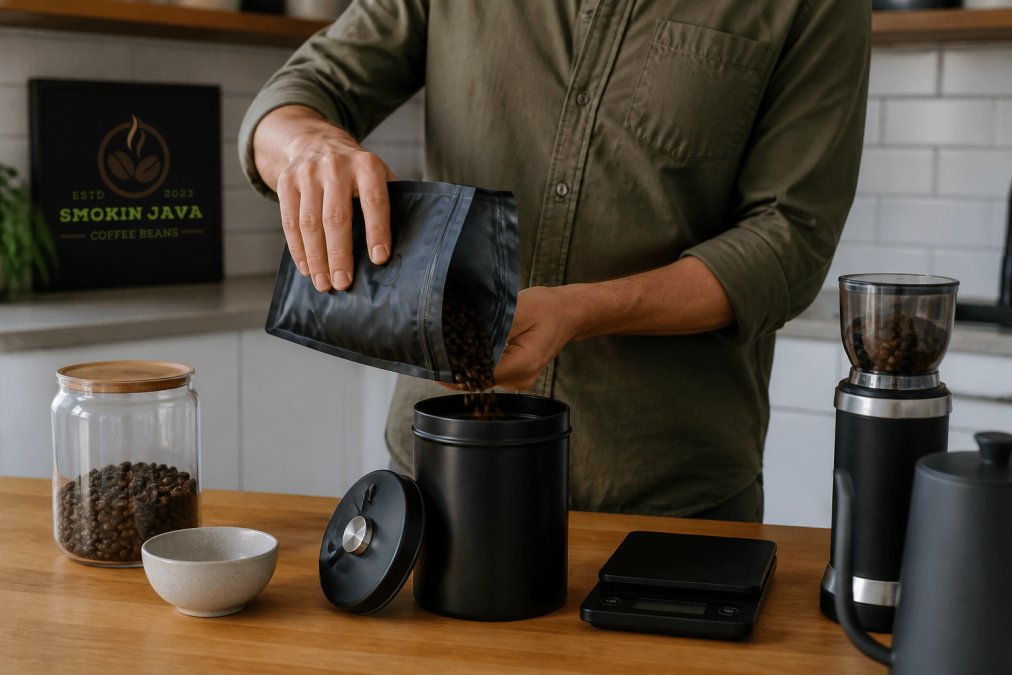
A simple routine:
- Keep beans in an opaque, airtight container
- Store at room temperature, away from the stove
- Skip the fridge for daily use; moisture and odors get in
- Freeze only for long-term storage, in sealed portions
- Grind right before you brew
Blind Taste Test: Proving the Difference at Home
You don't have to take anyone's word for it. A blind taste test is the fastest way to prove the difference to yourself. Brew two cups the same way, one from freshly roasted beans and one from a store bought bag, and have someone else label them A and B so you don't know which is which.
The Real Cost: Economic Value Analysis of Fresh vs Store Bought Coffee
Fresh coffee can look more expensive per bag, but the value math usually favors it. Stale coffee gets dumped, re-bought, or doctored with milk and sugar to hide flat flavor. Fresh coffee tastes good enough to drink black, so you waste less and enjoy more of what you paid for.
- Calculate cost per cup for each option. Divide the bag price by the number of cups it makes. A 12-ounce bag of whole bean coffee typically yields about 16-20 cups at 18-20 grams per cup. A 12-ounce bag of pre-ground may yield similar cup counts but with more waste from stale grounds.
- Estimate the stale waste factor. For store bought coffee that has been sitting for months, a common pattern is that 20-30% of the bag gets poured out or tolerated rather than enjoyed. For freshly roasted coffee stored well, that waste drops to under 10%.
- Adjust for enjoyment. If you drink coffee black, fresh coffee delivers more of the flavor you paid for. If you add milk and sugar, you may mask staleness, but you are also paying for additives that fresh coffee does not need.
- Compare the real cost per good cup. A bag that costs a little more but delivers every cup at peak flavor often wins on cost per enjoyable cup.
How to Buy Freshly Roasted Organic Coffee Online
To buy freshly roasted organic coffee online, prioritize roasters who roast to order and print a roast date on every bag. That combination is the clearest signal that freshness is a practice, not a slogan.
What to Look for in a Roaster
Check for these before you commit:
- Roasted-to-order or roast-on-ship policies
- A visible roast date on the packaging
- Organic certification you can verify
- Clear origin information for single-origin lots
- Fair, ethical sourcing language with specifics
The U.S. Department of Agriculture's organic labeling standards explain what the organic seal actually certifies, which is worth checking before you trust any "organic" claim.
Frequently Asked Questions
Is freshly roasted coffee actually better than store-bought?
Freshly roasted coffee typically tastes better because the volatile compounds that create aroma and flavor are still intact. Store-bought coffee often sits on a supermarket shelf for months, allowing oxidation and staling to flatten its flavor profile. When you buy freshly roasted coffee and brew it within the freshness window, you get brighter acidity, clearer origin notes, and a fuller body. The difference is most obvious in black coffee, where nothing masks stale flavors.
How long should you wait to drink freshly roasted coffee?
Most roasters suggest waiting 3 to 7 days after the roast date for drip or pour-over, and 7 to 14 days for espresso. This coffee degassing period lets carbon dioxide escape so water can extract evenly. Brewing too soon can cause uneven extraction and a flat or sour cup. The resting period paradox is real: beans can be too fresh. After resting, peak flavor usually lasts another 2 to 3 weeks if stored properly.
How should I store my coffee beans to maintain freshness?
Keep beans in an airtight, opaque container away from light, heat, and moisture. Store them at room temperature, not in the fridge, because condensation and odors can ruin the flavor. Buy whole bean and grind right before brewing to limit oxidation. If you buy in bulk, freeze a portion in a vacuum-sealed bag and thaw it fully before opening. Following these steps for how to store coffee beans for maximum freshness preserves aroma and extends the drinking window.
Does organic coffee make a difference in flavor?
Organic certification does not guarantee better flavor, but it does mean the coffee was grown without synthetic pesticides and often with more attention to soil health. Many drinkers find organic beans have cleaner, more transparent flavor profiles because the growing conditions support slower cherry maturation. The bigger flavor factors are roast date, origin, and roast level. When you buy freshly roasted organic coffee online, you get both the farming standards and the freshness that protects flavor.
How long does coffee stay fresh after roasting?
Whole bean coffee stays at peak flavor for about 2 to 4 weeks after the roast date if stored in an airtight container. Pre-ground coffee loses aromatics much faster, often within days, because more surface area is exposed to oxygen. Vacuum-sealed bags with one-way valves slow oxidation but do not stop it. For the best cup, check the roast date on the bag and use beans within the freshness window rather than relying on a best-by date.
Freshly roasted vs store bought coffee is really a question about how much flavor you're willing to settle for. The gap is real, and it shows up most in aroma and finish. If you want coffee that reaches your door close to its roast date, Smokin Java roasts the day it ships, sources organic beans, and packs in eco-friendly materials. Add a bag of Whiskey Barrel Aged or a pack of single-serve capsules to your cart and taste the difference for yourself.