

Table of Contents
- Washed Process Coffee Explained: What Happens After Harvest
- The Step-by-Step Washed Process: From Cherry to Parchment
- Washed vs Natural Coffee: Two Roads From the Same Cherry
- What Washed Coffee Flavor Profile Actually Tastes Like
- Honey Processed Coffee and Where It Sits Between the Two
- Best Brewing Methods for Washed Coffee
- Water Use, Equipment, and Troubleshooting Washed Lots
- Conclusion
- Frequently Asked Questions
Last Updated: October 15, 2026
Washed Process Coffee Explained: What Happens After Harvest
Washed process coffee is the method of removing the fruit from the coffee cherry before drying the seed, and it produces the cleanest, most consistent cup in specialty coffee. At Smokin Java, we source beans from growing regions around the world, and washed lots are the ones we reach for when we want a coffee that tastes like where it grew.
That's the short answer. The longer one involves fermentation tanks, water channels, drying beds, and a fair amount of judgment calls from the people running the mill.
Why the Wet Process Removes the Fruit Early
The wet process is called "washed" because water does the work of separating fruit from seed. Growers depulp the cherry within hours of picking, then ferment and rinse away the remaining mucilage before the bean ever hits a drying bed.
Compare that to natural processing, where the whole cherry dries around the seed for weeks. The fruit breaks down slowly and leaves behind sugar and ferment flavors. Washed coffee skips that entirely.
Where Washed Processing Fits in Coffee's Post-Harvest Timeline
Washed processing sits between harvesting and dry milling, and it's the longest hands-on phase of the whole chain. Pickers select ripe coffee cherry by hand, often with a sorting pass to remove underripe and damaged fruit.
Then the clock starts. Fruit left sitting too long starts to ferment on its own, and that shows up in the cup as vinegar or rot.
The Step-by-Step Washed Process: From Cherry to Parchment
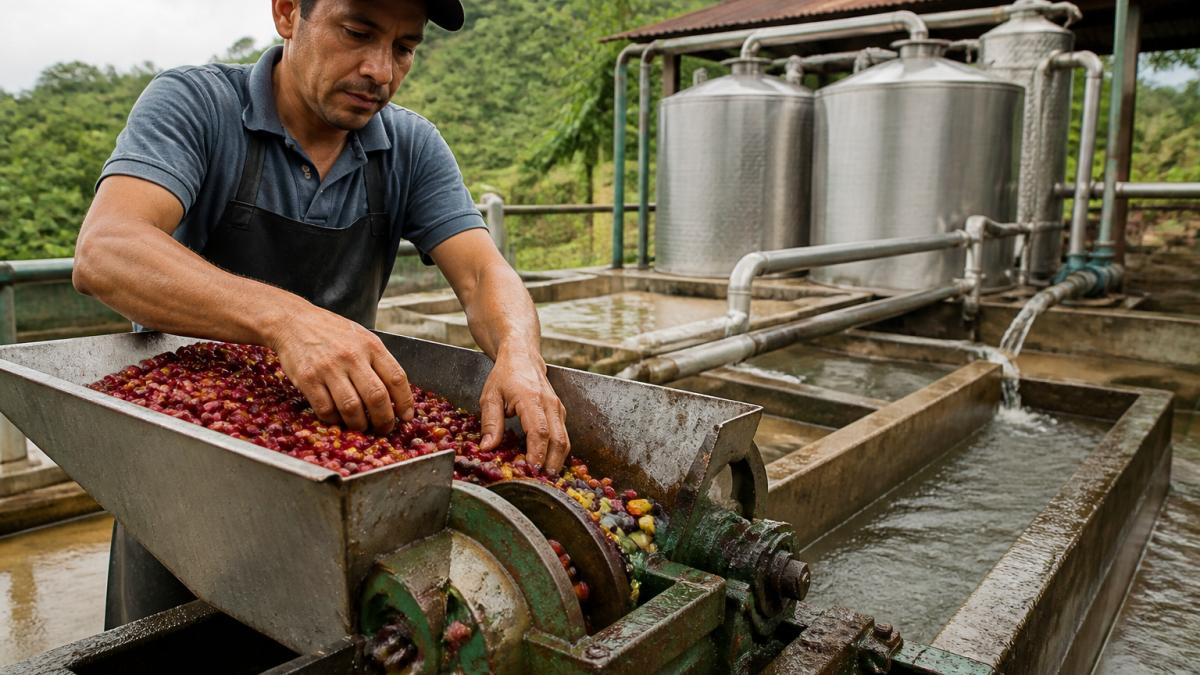
The washed method runs through six stages: depulping, fermentation, washing, soaking, drying, and resting. Each one changes what the final cup tastes like.
- Harvest and sort ripe cherries by hand or flotation
- Depulp to strip the skin and most of the fruit
- Ferment in tanks to break down remaining mucilage
- Wash in channels to rinse the seed clean
- Dry on raised beds or patios to target moisture
- Rest in parchment before dry milling and export
Depulping and the Fermentation Tank
A pulping machine squeezes the cherry so the seed pops out, leaving a layer of sticky mucilage still attached. That layer has to go, and fermentation is how it comes off.
Timing is everything here. Too short and mucilage stays stuck to the parchment. Too long and the bean picks up vinegar or overripe notes that no roast can fix.
Washing Channels, Drying Beds, and Moisture Content
After fermentation, workers flush the seeds through washing channels. The clean, denser beans sink while floaters and debris wash away. That's bean density sorting in action, and it matters because dense beans roast more evenly.
Then comes drying. Drying beds, patios, and mechanical dryers bring the bean down to a stable moisture content so it stores without molding. Drying time runs days to weeks depending on weather and method.
Washed vs Natural Coffee: Two Roads From the Same Cherry
Washed vs natural comes down to when the fruit leaves the seed. Washed removes it before drying. Natural leaves it on, and the fruit ferments into the bean over weeks.
That single difference drives everything else:
| Factor | Washed | Natural |
|---|---|---|
| Fruit removal | Before drying | After drying |
| Flavor focus | Clarity, acidity | Fruit, sweetness |
| Body | Lighter | Heavier |
| Risk profile | Fermentation errors | Mold, uneven drying |
| Water use | Higher | Lower |
Neither is better. They're different tools for different cups.
What Washed Coffee Flavor Profile Actually Tastes Like
The washed coffee flavor profile is clean, bright, and easy to read. You get flavor clarity first: each tasting notes element shows up on its own instead of blurring together. Acidity tends to be higher and more defined, whether that's citrus, berry, or stone fruit. Body is lighter than a natural, and the aftertaste is shorter but cleaner.
A clean cup is the whole point. If you want to taste what a specific region or variety actually contributes, washed coffee is the honest version. Blended or muddled flavors usually mean the fruit got in the way.
Honey Processed Coffee and Where It Sits Between the Two
Honey processed coffee sits between washed and natural on the fruit-removal spectrum, and understanding where it lands helps explain why washed coffee tastes the way it does.
The amount of mucilage left on determines the cup. Most mills describe honey lots by color, and the color is a rough shorthand for how much mucilage stayed on the bean:
| Honey style | Mucilage left on | Cup character |
|---|---|---|
| White honey | Very little | Closest to washed; clean, bright, lightly sweet |
| Yellow honey | Some | Balanced; mild fruit, medium body |
| Red honey | More | Sweeter, heavier, jammy fruit |
| Black honey | Almost all | Closest to natural; intense fruit, heavy body |
Less mucilage left on means a cup closer to washed. More left on pushes it toward natural.
The practical difference for a washed coffee drinker is consistency. Washed processing removes all the mucilage, so the seed dries naked and the cup reflects the bean itself.
Regional preferences matter too. Costa Rican mills popularized the honey style and often use it to differentiate their lots from fully washed neighbors. Brazilian producers lean on honey processing to add sweetness to beans that might otherwise taste flat. El Salvador and Guatemala have both built reputations on honey lots that split the difference between clarity and fruit.

Best Brewing Methods for Washed Coffee
The best brewing methods for washed coffee are the ones that let clarity and acidity come through. Pour-over and drip are the natural fits. A Chemex or V60 gives you a bright, tea-like cup that shows off regional character.
Other good options:
- Pour-over for maximum clarity and control
- Drip for a consistent daily cup with less fuss
- AeroPress for a fuller body without losing the clean finish
- Cold brew for a smooth, low-acid version in summer
Espresso works too, though lighter washed lots can taste sharp without careful dialing. If you're used to heavy, chocolate-forward coffee, start with a medium roast washed bean before jumping to a light one.
Water Use, Equipment, and Troubleshooting Washed Lots
Washed processing asks more of a mill than natural processing does. It needs water, tanks, channels, and drying infrastructure, and it needs people watching the clock.
The Equipment Chain at a Wet Mill
A washed lot moves through a specific set of machines and structures. Knowing what they are helps you understand why two washed coffees from the same region can taste so different.
- Pulper (depulper): Squeezes the cherry so the seed pops out, leaving mucilage attached. Disc pulpers are common on smaller farms; drum pulpers handle higher volume at larger stations.
- Fermentation tanks: Concrete, tile, or stainless steel vessels where seeds sit while microbes break down mucilage. Stainless is easier to clean and gives more control; concrete is cheaper and common in older mills.
- Washing channels: Long, gently sloped troughs of moving water. Clean, dense beans sink and settle; floaters, debris, and low-density beans wash away. This is density sorting in action.
- Mechanical demucilager: A machine that scrubs mucilage off with far less water than tank fermentation. Common in water-scarce regions and at high-volume mills.
- Drying beds and patios: Raised mesh beds or concrete patios where seeds dry in the sun. Mechanical dryers are used when rain or humidity makes sun drying unreliable.
Water Consumption and Regional Variations
Water consumption is the biggest knock against washed processing. Traditional methods can use a lot of water per batch, which is a real problem in dry regions. Many mills now recirculate water or use mechanical demucilagers that scrub mucilage off with far less water.
Regional variations matter too. East African stations, especially in Ethiopia and Kenya, often ferment in shaded tanks and dry on raised beds, sometimes with the parchment still slightly tacky. Central and South American mills lean on solar dryers and patios to dodge rain, and Colombian cooperatives frequently use eco-friendly depulping systems that recirculate water.
Common Defects and How Stations Fix Them
Most washed defects trace back to timing, not equipment. Here's what goes wrong and how stations handle it:
| Defect | Cause | Fix |
|---|---|---|
| Vinegar, rot | Over-fermentation | Shorter tank time, cooler water, or a demucilager |
| Stuck parchment | Under-fermentation | Longer ferment, warmer water, or mechanical demucilager |
| Mold, mustiness | Slow or uneven drying | Raised beds, better airflow, mechanical dryer backup |
| Uneven roast | Mixed bean density | Density sorting in wash channels |
| Potato defect | Antestia bug damage in the cherry | Better sorting at harvest; no fix after the fact |
| Phenolic, medicinal | Over-fermentation combined with dirty tanks | Sanitize tanks between lots; shorter ferment |
A common mistake at smaller stations is skipping the density sort after fermentation. Floaters and light beans roast differently than the rest of the batch, and one bad bean drags down the whole profile. Another is letting cherries sit too long before depulping. Fruit left sitting starts to ferment on its own, and that shows up in the cup as vinegar or rot.
If you want to taste what clean processing actually delivers, our Colombia is fully washed and dried in solar dryers, with dried orange, berry, and chocolate notes. Our Peru brings salted caramel and citrus from a washed, organic cooperative lot. And our Ethiopia Natural shows the contrast when the fruit stays on.

Conclusion
Washed process coffee rewards attention. It's the method that shows you what a bean actually tastes like, without fruit sugars covering it up. Whether you're brewing a bright Ethiopian lot or a smooth Colombian, the clean finish is the payoff.
At Smokin Java, we roast every batch the day it ships, so the clarity in a washed lot actually reaches your cup. And if you want to taste the contrast, our Ethiopia Natural shows what happens when the fruit stays on.

Every bag is roasted to order, sourced through ethical partnerships with farmers, and packed in eco-friendly materials. Add to cart and taste what clean processing actually delivers.
Frequently Asked Questions
What does wet processed coffee mean?
Wet processing is another name for the washed process. Ripe coffee cherries are depulped within hours of harvesting, then the sticky mucilage is broken down through fermentation and washed off with water before the beans dry inside their parchment layer. Removing the fruit early is what gives washed coffee its clean cup, higher perceived acidity, and flavor clarity that lets a single origin's tasting notes come through without fruit-forward interference.
What is the difference between washed and natural coffee?
Washed coffee strips the cherry and mucilage off before drying, while natural coffee dries the whole cherry around the bean for weeks. That single choice drives everything downstream. Washed lots tend to show flavor clarity, bright acidity, and a lighter body; natural lots taste fruitier and sweeter with heavier body. In washed vs natural coffee comparisons, neither is objectively better. The right pick depends on whether you want a transparent, terroir-driven cup or an intense, berry-forward one.
Does washed processing affect coffee acidity?
Yes. Because fermentation and washing remove the fruit layer before drying, washed coffee usually shows higher perceived acidity and a cleaner cup than natural coffee. The organic acids that survive processing are easier to taste without fruit sugars covering them. That is why washed coffee flavor profile notes often read as citrus, berry, dried orange, or chocolate rather than jammy or wine-like. Roast level and brewing still shift the final result, but processing sets the starting point.
Which brewing methods work well with washed coffee?
Pour-over, drip, AeroPress, and Chemex are the best brewing methods for washed coffee because they highlight the clarity and acidity the process creates. Use water just off boil, a medium grind, and a ratio around 1:15 to 1:16. If the cup tastes thin, tighten the grind slightly. If it tastes sharp or sour, extend the brew time. Washed beans also work well as cold brew, though the clean profile reads more delicate than a natural lot would.