
Quick Summary
Organic coffee is grown without synthetic pesticides or fertilizers, and in the United States the USDA Organic seal on the bag is the regulated proof of that claim. Certification covers farming methods, not freshness, so check the seal, the certifying agent and the roast date before you buy.
- Look for the USDA Organic seal on the physical bag, not only in product descriptions.
- Organic describes farming methods, while Fair Trade describes how farmers are paid and organized.
- Whole bean coffee keeps its flavor longer than ground, so grind just before brewing.
- Choose a grind to match your brewer: coarse for French press, medium for drip, fine for espresso.
- Peru is a good everyday pick, while Bali Blue and Honduras suit drinkers who prefer chocolate notes.
Table of Contents
- What Organic Coffee Means and How to Verify It
- Criteria for Judging Organic Coffee Brands
- Smokin Java Single-Origin Coffees Reviewed
- Whole Bean Versus Ground: Which Keeps Organic Coffee Fresher
- Organic Ground Coffee for Drip, French Press and Espresso
- Cost per Cup and Taste Trade-Offs Across the Lineup
- Choosing Your Next Bag of Smokin Java Organic Coffee
- Frequently Asked Questions
What Organic Coffee Means and How to Verify It
Organic coffee is grown without synthetic pesticides or fertilizers, and in the United States the word "organic" on a coffee bag is regulated by the USDA National Organic Program. The label is only as useful as your ability to check it. This review explains what the label promises, how to verify it, and which of our single-origin coffees fit different tastes.
Organic certification covers how the crop was farmed and handled. It does not, on its own, tell you how fresh the coffee is or how it will taste in your cup. That is why we treat certification as the starting point, not the whole answer.
USDA National Organic Program standards
Reading a USDA Organic Seal
The USDA Organic seal appears on products that meet the National Organic Program standards. Look for the seal on the bag itself, not only in product descriptions. A certified product will also list the certifying agent somewhere on the packaging.
Check the wording as well as the seal. "Made with organic ingredients" and "100% organic" mean different things, and a bag can carry a seal only when the contents qualify.
Organic Versus Fair Trade and Other Labels
Organic and Fair Trade answer different questions. Organic describes farming methods. Fair Trade describes how farmers are paid and organized. A coffee can carry one, both, or neither, so read each label separately.
Compare the certification codes listed on each product page rather than assuming one label implies the others.
Criteria for Judging Organic Coffee Brands
Most organic coffee pages tell you a brand is certified and stop there. A useful comparison needs a repeatable scorecard you can apply to any bag, including ours. Below is the five-criteria framework we use, with the specific check for each one and how to score it.
- Verifiable certification (0-2 points): The USDA Organic seal appears on the physical bag, and the certifying agent is named on the packaging. Score 2 if both are present; score 1 if only the seal appears; score 0 if "organic" appears only in marketing copy. USDA Organic Integrity Database
- Origin specificity (0-2 points): The listing names the country, region, and, where available, the cooperative or grower group and processing method (washed, natural, honey). Score 2 for region plus processing method; score 1 for country only; score 0 for "blend" with no origin detail.
- Roast date transparency (0-2 points): A roast date is printed on the bag, not just a best-by date. Score 2 if a roast date is printed; score 1 if only a best-by date appears; score 0 if neither is shown.
- Format and grind options (0-1 point): Whole bean and ground options are both offered, with grind selection at checkout. Score 1 if both are available; score 0 if only one format is sold.
- Normalized price (0-1 point): The listing shows bag size in ounces so you can calculate price per ounce. Score 1 if ounces are stated; score 0 if only bag count is shown.
A perfect score is 8. In practice, most retail organic coffees score 4-6 because they skip roast dates or origin processing detail. Apply the same five checks to any brand you are considering, and keep the scores side by side. The point is not the number, it is forcing each claim onto the bag where you can verify it.
Watch out: a bag can carry the USDA seal and still sit on a shelf for months, so certification and freshness are separate scores. Do not let a strong certification score hide a missing roast date.
Smokin Java Single-Origin Coffees Reviewed
Our current lineup includes several single-origin coffees. Each has a different profile, so the right choice depends on what you enjoy in a cup.
Bali Blue and Mexico: Chocolate and Brighter Profiles
Bali Blue is an organic coffee from smallholder farmers in Kintamani, Bali, grown at 1200-1600 meters. It is medium-dark roasted, with notes of dark chocolate, molasses and brown sugar. At $18.99, it is priced like our other single-origin coffees. Bali Blue is worth a look if you like chocolate-forward coffee.
Mexico is medium roasted, with chocolate, cinnamon and green apple notes. It comes from growers in Chiapas and Oaxaca and is also priced at $18.99. It offers a brighter cup with more fruit. You can buy the Mexico coffee directly from our shop.
Peru, Peru Decaf and Honduras: Sweeter, Caramel-Forward Cups
Peru is a medium roast with salted caramel, citrus and a silky sweetness. It is certified organic and carries a FT code, and it costs $18.99. Peru is available on its product page.
Peru Decaf uses the same growers and roast profile, with caramel, citrus and a smooth finish. It is decaffeinated using the Swiss Water Process and is listed at $79.99. If you want decaf without giving up the sweetness, Peru Decaf is the option to compare.
Honduras is medium-dark roasted, with caramel, spice and brown sugar, and comes from Marcala. Its price is $18.99.
Whole Bean Versus Ground: Which Keeps Organic Coffee Fresher
Whole bean coffee keeps its flavor longer than ground coffee because less of the surface is exposed to air. Ground coffee loses aroma faster, so grind just before brewing if you can. If you buy ground coffee, store it in an airtight container away from heat and light.
Organic Ground Coffee for Drip, French Press and Espresso
Choosing a grind depends on your brewer. Coarse grinds suit French press, medium grinds suit drip machines, and fine grinds suit espresso. Mexico and Peru are medium roasts, while Honduras and Bali Blue are medium-dark roasts.
Cost per Cup and Taste Trade-Offs Across the Lineup
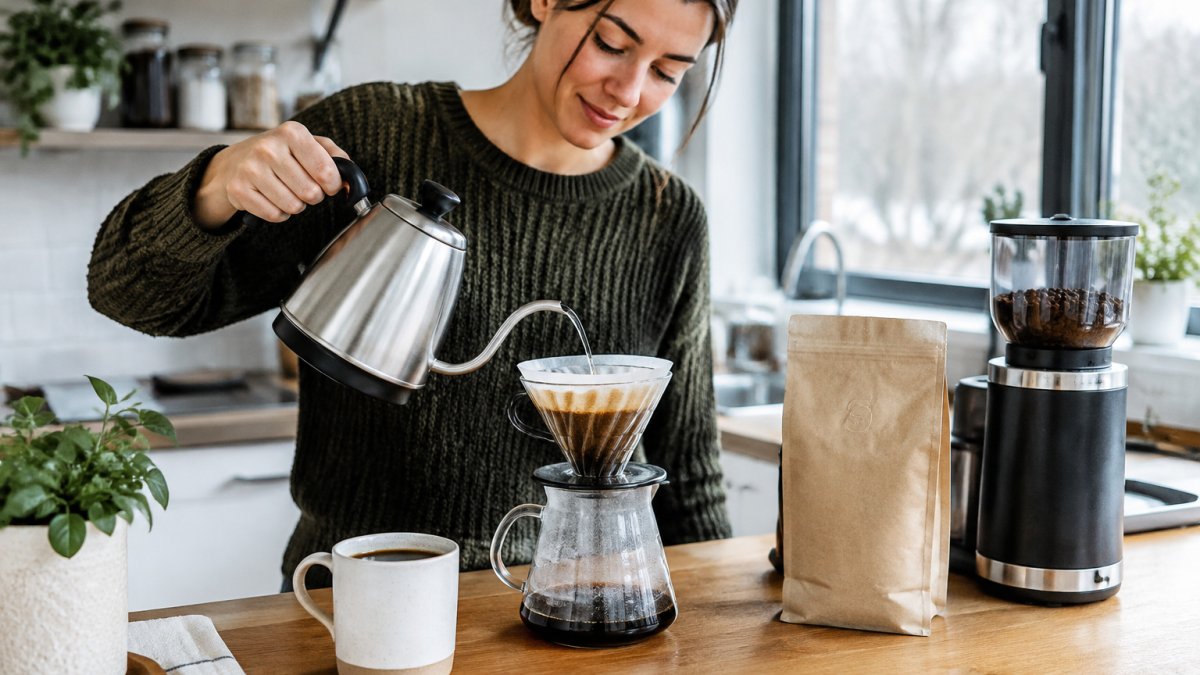
Bag price alone does not tell you value. To compare fairly, normalize to price per ounce and then to cost per cup using a standard dose. The math below uses a 12-ounce bag and a 0.5-ounce dose per 8-ounce cup, which is a common starting point for drip brewing; espresso and cold brew will shift the number because dose and yield differ.
- Standard single-origin bags (Bali Blue, Mexico, Peru, Honduras) at $18.99 per 12-ounce bag: that is about $1.58 per ounce. At a 0.5-ounce dose, each cup costs roughly $0.79 before accounting for any brewed-off weight. A 12-ounce bag yields about 24 cups at that dose.
- Peru Decaf at $79.99: the higher price reflects the Swiss Water Process decaffeination step, which adds cost per pound. Normalize it the same way, price per ounce first, then per cup, so you are comparing decaf to decaf rather than decaf to regular.
Taste trade-offs follow the same logic. Bali Blue and Honduras are medium-dark roasts with chocolate, molasses, and brown sugar notes. Mexico and Peru are medium roasts with brighter fruit and caramel notes. If you drink two cups a day, the per-cup difference between a $0.79 cup and a $0.90 cup is small, but the difference in freshness and roast date is not, so weigh roast timing alongside price.
Watch out: cost per cup rises quickly if you dose heavy or brew large batches, so measure your actual dose once before trusting any per-cup estimate. A scale removes the guesswork.
Single-origin bag price at $18.99 per 12-ounce bag
Choosing Your Next Bag of Smokin Java Organic Coffee
Start with the flavor you want. If you prefer chocolate and depth, Bali Blue or Honduras is a good first bag. If you want something sweet and easy to drink every day, Peru is a reliable pick. Peru Decaf offers a decaffeinated option with a caramel-forward profile.
If you are still deciding, our Best Sellers Sample Pack lets you try several coffees, including Peru, Mexico and Bali Blue, before you buy a full bag. Whichever you choose, we roast each batch the day it ships. Smokin Java's organic coffees are a good choice for everyday drinking.
Frequently Asked Questions
What is the healthiest organic coffee to buy?
No single organic coffee is proven to be the healthiest, because the health effects of coffee depend mostly on how much you drink and how it is prepared, not on the farming label alone. Organic certification means the beans were grown without synthetic pesticides or fertilizers and processed under USDA rules. If that matters to you, look for a USDA Organic seal and choose a roast and origin you enjoy, since you will drink it more consistently. Smokin Java's Bali Blue, Mexico, Peru and Honduras are all certified organic on their listings, so the choice comes down to flavor preference.
How can you tell if coffee is certified organic?
Check the package for the USDA Organic seal and a certifier's name or code, which shows a USDA-accredited certifying agent inspected the operation. The word organic alone on a label is not the same as certification, and phrases like natural or responsibly grown are not regulated the same way. For Smokin Java coffees, the product listings state the certification, such as Organic for Bali Blue and Organic, EP for Mexico, so compare those details with what appears on the bag you receive.
Does organic coffee taste different from conventional coffee?
Organic status alone does not determine taste. Origin, variety, processing method and roast level have a much larger effect on the cup. Smokin Java's Bali Blue is a medium-dark roast with dark chocolate and molasses notes, while Peru is a medium roast with salted caramel and citrus. Buy a small bag of two or three organic coffees with different roasts and brew them the same way to see which flavors you prefer.
Is organic whole bean or organic ground coffee the better choice?
Whole bean organic coffee usually stays fresher longer, because grinding exposes more surface area to air and speeds the loss of aromatic compounds. Ground organic coffee is more convenient for drip makers and French presses, but it should be used within a few days of opening. Smokin Java roasts each batch upon order and ships it the day it is roasted, so buying whole bean and grinding just before brewing gives you the best flavor from the same bag.
