
Table of Contents
- Is Single Origin Coffee Too Intense? The Short Answer
- What Actually Makes Coffee Taste Intense
- Single-Origin Coffee vs. Blend: Where Intensity Comes From
- Coffee Roast Levels and Flavor: The Biggest Lever You Control
- How to Choose a Mild Single-Origin Coffee
- How to Brew Single-Origin Coffee for a Smoother Cup
- Intensity vs. Caffeine: What You're Really Feeling
- Troubleshooting a Harsh or Sour Cup
- Frequently Asked Questions
Last Updated: October 19, 2026
Is Single Origin Coffee Too Intense? The Short Answer
No, single origin coffee is not too intense by default. "Single origin" describes where beans come from, not how strong they taste.
That distinction trips up a lot of home brewers. They see a bag from one farm and assume it will hit harder than a blend. It usually won't.
At Smokin Java, we roast single origins that drink easy, including a Brazil Santos with a smooth, cocoa-forward cup. Below, we break down what actually drives intensity and how to brew a milder cup.

What Actually Makes Coffee Taste Intense
Intensity comes from four things: roast level, how much coffee you use, how fine you grind it, and how long water touches the grounds. Origin plays a role too, but it sits further down the list.
A dark roast tastes bolder because the roasting process builds bitter, smoky compounds. A light roast keeps more of the bean's natural fruit and floral notes, which read as brighter rather than heavier.
Acidity, Bitterness, and Body in Plain Terms
Acidity is the bright, tangy sensation on the front of your tongue. It is not the same as stomach acid, and it is not a flaw.
Bitterness is the drying, sharp taste that lingers. Too much usually means over-extraction or a very dark roast.
Body is the weight of the coffee in your mouth. Think skim milk versus whole milk.
A coffee can be high in acidity and still feel light. It can be low in acidity and taste heavy. Intensity is the blend of all three, and it shifts with every brewing choice you make.
Single-Origin Coffee vs. Blend: Where Intensity Comes From
Blends are built for consistency. A roaster mixes several coffees so the cup tastes the same every time, and often the goal is a rounded, familiar flavor. Single-origin coffee does the opposite: it lets one region's character show through.
Here is the part most guides get wrong. A blend is not automatically milder. Some blends lean dark and heavy on purpose. And plenty of single origins are soft and sweet.
| Factor | Single Origin | Blend |
|---|---|---|
| Flavor focus | One region's character | Balanced, repeatable cup |
| Consistency | Varies by harvest | Stable year to year |
| Intensity range | Mild to bold | Mild to bold |
| Best for | Exploring flavor | Reliable daily cup |
So if you want a gentler cup, the label on the front matters less than the roast and the brew.

Coffee Roast Levels and Flavor: The Biggest Lever You Control
Roast level is the single biggest factor you can control when buying. Light roasts keep more origin flavor and tend to taste brighter and more tea-like. Medium roasts balance sweetness and body. Dark roasts push toward smoky, bitter, and heavy.
If intensity worries you, start at medium and work lighter. A medium roast single origin from a washed process is one of the easiest entry points into the category.
How to Choose a Mild Single-Origin Coffee
Look for three things on the bag: origin, altitude, and process. Lower-grown beans from Brazil tend to taste nutty and smooth. High-grown beans from Ethiopia or Colombia often bring more fruit and acidity.

Washed coffees usually taste cleaner and lighter than natural-process coffees, which can be fruitier and heavier. Medium roasts sit in the middle and suit most palates.
Reading Origin, Altitude, and Process on the Bag
- Brazil, medium roast, pulped natural: smooth, cocoa notes, low intensity
- Colombia, medium roast, washed: dried orange and chocolate, balanced
- Ethiopia, medium-light, natural: fruity and floral, brighter but not heavy
Our Brazil Santos and Colombia are both medium roasts that suit drinkers who want a calm, steady cup. The Single Origin Favorites Sample Pack lets you try six origins side by side before committing to a full bag.
How to Brew Single-Origin Coffee for a Smoother Cup
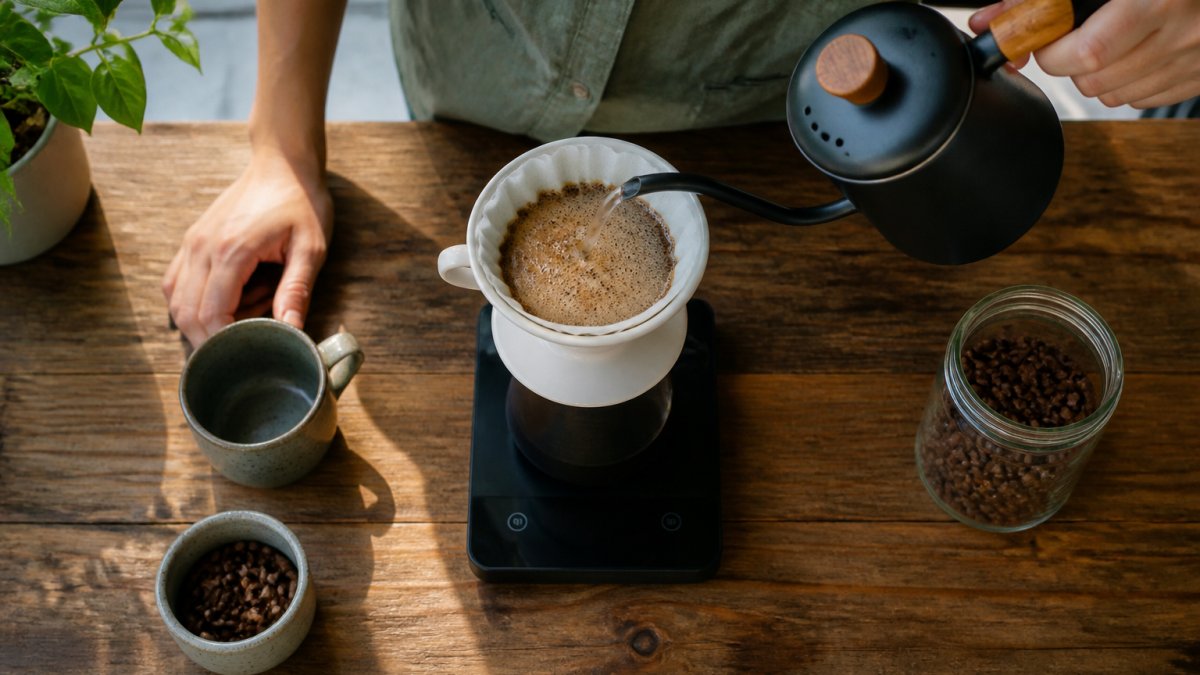
Brewing controls intensity as much as the bean does. The good news is that you do not need new equipment, just a few deliberate adjustments. Below are starting points for the most common home methods, followed by the single changes that pull back intensity fastest.
Starting Parameters for a Gentler Cup
These are reasonable baselines, not rules. Adjust one variable at a time so you can taste what changed.
| Method | Coffee-to-Water Ratio | Water Temperature | Grind | Target Brew Time |
|---|---|---|---|---|
| Pour-over (cone dripper) | 1:16 to 1:17 | 195-200°F | Medium | 2:30-3:00 |
| French press | 1:15 to 1:16 | 195-200°F | Coarse | 4:00 steep |
| Drip machine | 1:16 to 1:17 | 195-205°F | Medium | Follow machine cycle |
| Espresso | 1:2 to 1:2.5 (dose to yield) | 198-202°F | Fine | 25-30 seconds |
| Cold brew | 1:8 concentrate, dilute to taste | Cold | Coarse | 12-18 hours |
A 1:16 ratio means one part coffee to sixteen parts water by weight. For a 12-ounce cup, that is roughly 22 grams of coffee to 350 grams of water. If that cup still tastes heavy, move to 1:17 before you change anything else.
The Five Adjustments That Lower Perceived Intensity
- Coarsen the grind. Finer grounds expose more surface area and extract faster, pulling out more bitter compounds. Moving one step coarser on a burr grinder is the single most effective fix for a harsh cup.
- Drop the water temperature. Water above 205°F extracts bitter and drying compounds quickly. Try 195-200°F for pour-over and French press. If you do not have a variable-temperature kettle, let boiled water rest for about 30 seconds before pouring.
- Shorten the contact time. For pour-over, aim for a total brew under three minutes. For French press, steep four minutes and press slowly. For espresso, cut the shot at 25 seconds instead of 30.
- Increase the water-to-coffee ratio. More water dilutes body and intensity without changing the bean. Going from 1:15 to 1:17 is a noticeable step lighter.
- Brew a medium roast instead of a dark. Roast level sets the ceiling on how bold a cup can taste. A medium roast single origin gives you more room to adjust before the cup turns heavy.
Method-Specific Notes
Pour-over. A medium grind and a steady, slow pour keep the bed even and the cup clean. If the drawdown stalls, the grind is too fine and the cup will taste bitter.
French press. Coarse grounds and a full four-minute steep give a round, heavy cup.
Espresso. A shorter shot with a coarser grind pulls back bitterness fast. If the shot tastes sharp, grind coarser before you change the dose. If it tastes watery, grind finer.
Cold brew. Cold water extracts fewer bitter compounds, so cold brew often reads as smoother even at the same strength. Dilute the concentrate to taste rather than drinking it straight.
If you want a starting point that already leans gentle, a medium-roast single origin like our Brazil Santos gives you more margin for error than a dark roast. Brew it at 1:16 with 200°F water and a medium grind, then adjust from there.
Intensity vs. Caffeine: What You're Really Feeling
Intensity and caffeine are not the same thing, and treating them as interchangeable is one of the most common mistakes home brewers make. A dark, heavy-tasting coffee does not automatically carry more caffeine. In fact, the relationship often runs the other way.
Why Roast Color Does Not Predict Caffeine
Caffeine is stable at roasting temperatures, so the roasting process does not destroy much of it. What roasting does do is drive off moisture, which means the beans lose weight. Because caffeine stays put while the bean shrinks, a light roast actually contains slightly more caffeine per scoop by weight than a dark roast of the same bean.
What you taste as intensity is mostly roast-derived bitterness and body, not caffeine. A dark roast tastes bolder because the roasting process builds smoky and bitter compounds, not because it delivers a bigger stimulant punch.
What Actually Drives Caffeine in Your Cup
Four factors matter far more than roast color:
- Bean type. Arabica beans, which make up most single-origin specialty coffee, typically contain less caffeine than robusta. A single-origin arabica will usually carry less caffeine than a blend that includes robusta.
- Dose. Caffeine scales with how much coffee you use. Going from 18 grams to 22 grams in a pour-over adds roughly 20 percent more caffeine, even if the cup tastes the same.
- Brew ratio and time. Longer contact time and finer grinds extract more caffeine, just as they extract more bitter compounds. A concentrated espresso shot has more caffeine per ounce than a drip cup, but a 12-ounce drip serving often delivers more total caffeine than a single shot.
- Serving size. A 16-ounce mug of drip coffee can carry more total caffeine than a 2-ounce espresso, even though the espresso tastes far more intense.
A Practical Way to Think About It
If a coffee feels too much, ask yourself which sensation you are reacting to. If the cup tastes bitter, smoky, or heavy, the fix is in the roast and the brew, not the caffeine. If you feel jittery or over-caffeinated, the fix is dose and serving size. Cutting your scoop from 22 grams to 18 grams lowers caffeine without changing the bean, and it also lightens body slightly.
Most practitioners find that a medium-roast single origin brewed at a moderate ratio gives the best of both: a cup that tastes balanced rather than harsh, with a caffeine load that is easy to control by adjusting the dose.
Troubleshooting a Harsh or Sour Cup
Sour and harsh are two different problems, and they have opposite fixes.
Sour or sharp? You likely under-extracted. Grind finer, raise the water temperature, or brew a little longer.
Bitter or drying? You likely over-extracted. Grind coarser, lower the temperature, or shorten the brew.
Just too heavy? Add more water or use less coffee. Body drops fast with a lighter ratio.
Start with one change at a time. Change two variables and you will not know which one fixed the cup.
Picking a single origin that fits your taste does not have to be a gamble.
Frequently Asked Questions
Is single origin coffee stronger than blended coffee?
Usually not in caffeine, but it can taste more intense. A single origin coffee is one lot from one region, so its flavors are more concentrated and easier to notice. Blends mix several coffees to round out sharp edges, which can read as smoother. Strength depends more on your coffee-to-water ratio, grind size, and roast level than on whether the bag says single origin. If a cup feels too intense, adjust the brew before blaming the origin.
Does single origin coffee have more caffeine?
No, origin alone does not raise caffeine. Caffeine is mostly set by the coffee species and how much ground coffee you use per cup. Arabica beans, which most single origin coffees are, actually carry less caffeine than robusta. A dark roast does not add caffeine either; it just tastes more bitter. If you want a gentler cup, weigh your dose and keep it consistent rather than switching origins.
Which single origin coffees have a mild, smooth flavor?
Look for medium roasts from Brazil, Colombia, or Honduras. A Brazil Santos with cocoa notes and a medium roast tends to taste smooth and balanced, while a Colombia with dried orange and chocolate notes stays approachable. A mild single-origin coffee usually comes from lower-altitude, nuttier, chocolate-forward lots rather than bright, high-grown floral ones. Ask for tasting notes like cocoa, caramel, or brown sugar if you want a gentle daily cup.
How can I make single origin coffee taste less bitter?
Start with grind size and water temperature. A grind that is too fine over-extracts and pulls out bitterness, so coarsen it slightly. Let water cool to around 195-205 F instead of pouring at a rolling boil. Keep your coffee-to-water ratio steady, roughly 1:16, and shorten brew time if the cup still tastes harsh. Freshly roasted beans also help, since stale coffee tastes flat and bitter no matter how you brew it.