

Table of Contents
- What Makes Coffee Acidic: pH, Roast, and Your Stomach
- Dark Roast vs Light Roast Acidity: What the Science Says
- Best Coffee Bean Origins for Low Acidity
- How to Reduce Coffee Acidity at Home: Brewing Techniques That Work
- The Role of Additives and Water Quality in Your Cup
- How to Read Labels and Verify Low Acid Coffee Claims
- Conclusion
- Frequently Asked Questions
Last Updated: September 28, 2026
What Makes Coffee Acidic: pH, Roast, and Your Stomach
If you're learning how to identify low acid coffee for sensitive stomachs, start with pH. Coffee usually lands between 4.5 and 5.5, which makes it mildly acidic, and small shifts matter when your stomach is already irritated.
Acidity isn't one thing. It's a mix of acids, roast chemistry, and how your body reacts to the bean itself.
At Smokin Java, we roast every batch to order, so we pay close attention to how roast level changes what ends up in your cup. This guide breaks down the science, then shows you what to look for.
Understanding pH Levels in Coffee
pH measures how acidic or alkaline a liquid is on a scale from 0 to 14. Lower numbers mean more acid; plain water sits at 7.
Coffee lands around 4.5 to 5.5, while orange juice sits near 3.5. Coffee is less acidic than citrus, but it still triggers symptoms in people with gastroesophageal reflux or gastritis.
A few things shift that number:
- Bean origin and altitude change the bean's natural acid content
- Roasting duration breaks down some acids and creates others
- Brewing temperature and extraction time pull different compounds into your cup
The acid you taste isn't always the acid that bothers your stomach, a distinction that matters throughout this guide.
How Roasting Changes the Acidity Profile
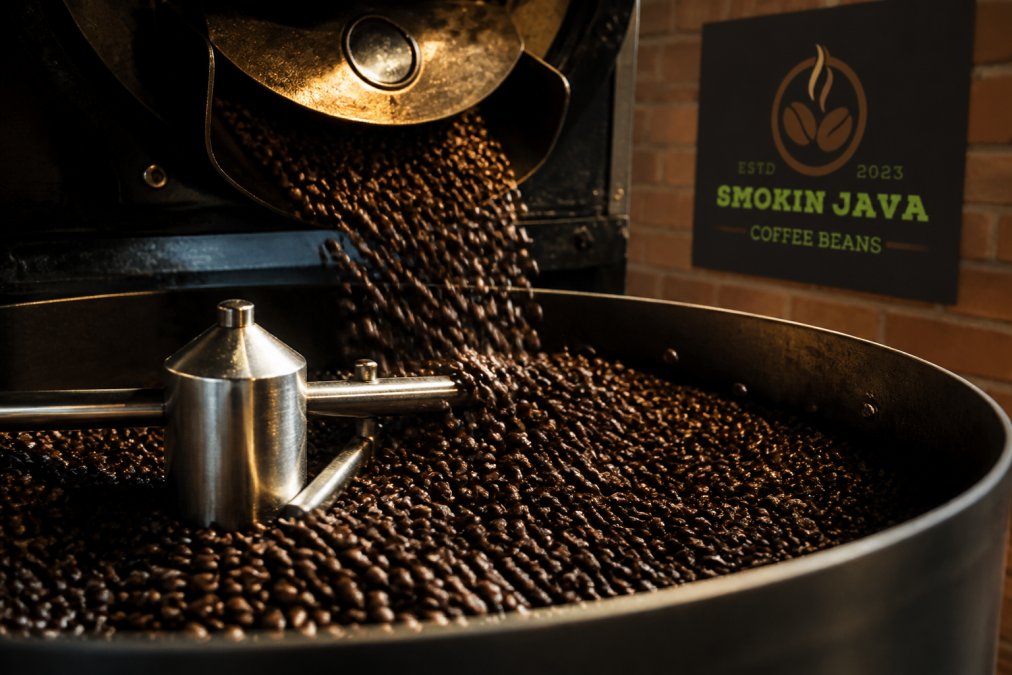
Roasting does more to your coffee's chemistry than any other step, transforming dense, grassy green beans.
During roasting, chlorogenic acid breaks down. Longer roasts destroy more of it. That's why dark roast coffee often tastes smoother and less bright than a light roast.
But dark roasts also produce N-alkanoyl-5-hydroxytryptamides, or C5HTs, which form during roasting and may stimulate stomach acid production. Longer, darker roasts create more of them.
So "darker equals gentler" isn't as clean as it sounds. Roast level changes which acids dominate, not whether acid exists at all.
Dark Roast vs Light Roast Acidity: What the Science Says
Dark roast coffee generally has less chlorogenic acid than light roast, but may contain more compounds linked to stomach irritation. That trade-off is why "low acid" claims deserve scrutiny.
Here's what actually happens:
- Light roast: More chlorogenic acid, brighter flavor, higher perceived acidity
- Medium-dark roast: Lower chlorogenic acid, more C5HTs, smoother taste
- Dark roast: Lowest chlorogenic acid, highest C5HTs, bold and smoky flavor
If your main issue is heartburn, a medium-dark roast often strikes the best balance. If bitterness bothers you more than reflux, a lighter roast with a gentler acidity profile may work better.
Bean density matters too: dense, high-grown beans roast more evenly, giving you more control over the final acid profile.
Best Coffee Bean Origins for Low Acidity
Origin is the first filter you can apply before you ever brew a cup. The rule that matters most: coffee grown at lower elevations tends to have lower acidity than high-grown beans.
At high altitude, cooler temperatures slow cherry maturation, letting the plant concentrate more chlorogenic acids and fruit-forward organic acids. At lower elevations, faster maturation produces less bright acid load and more body. That's why a Sumatran bean grown at 800 meters cups smoother than a Kenyan bean grown at 1,800 meters, even at the same roast level.
Use this table as a starting filter, not a guarantee. Roast level and processing can override origin.
| Origin | Typical Growing Elevation | Acidity Profile | Flavor Notes | Best For |
|---|---|---|---|---|
| Sumatra | 800-1,500 m | Low | Earthy, herbal, cedar | Sensitive stomachs, dark roast drinkers |
| Brazil | 800-1,200 m | Low to medium | Nutty, chocolate, caramel | Daily drinking, espresso |
| Peru | 1,100-1,700 m | Medium | Caramel, citrus, mild | Balanced cups, decaf |
| Colombia | 1,200-1,800 m | Medium | Red apple, caramel | All-rounder |
| Ethiopia | 1,500-2,200 m | High | Floral, berry, tea-like | Brightness lovers |
| Kenya | 1,400-2,000 m | High | Blackcurrant, wine-like | Complex brews |
How to identify a low-acid origin on a label:
- Look for a stated elevation. Under 1,200 meters is a strong signal for lower acidity.
- Check the region name. Sumatra Mandheling, Brazil Cerrado, and Peru Chanchamayo are commonly lower-acid lots.
- Prefer single-origin over blends. A blend can hide a high-acid Ethiopian component behind a low-acid Brazilian base.
- If elevation isn't listed, treat the origin claim as unverified.
Peru is a strong middle ground for sensitive stomachs, sitting between the very low-acid Sumatras and the brighter Colombians.
Processing Methods and Their Impact on pH
How a bean is processed changes its final chemistry as much as where it grew. The three main methods produce measurably different acid profiles.
- Wet-hulled (giling basah): Common in Sumatra. The parchment is removed while the bean is still wet, which reduces fermentation time and produces a lower-acid, heavier-bodied cup. This is a major reason Sumatran coffee is a default recommendation for sensitive stomachs.
- Washed: The fruit is removed before drying. Washed beans ferment longer, which develops more bright organic acids. Cleaner, brighter, higher perceived acidity.
- Natural (dry): The cherry dries around the bean. The fruit sugars ferment into the bean, creating a fruit-forward, sometimes wine-like cup with moderate acidity.
- Honey: A middle path. Some mucilage stays on the bean during drying, producing sweetness with moderate acidity.
How to Reduce Coffee Acidity at Home: Brewing Techniques That Work
You can lower the acid in your cup without buying different beans. Change how you brew.
Hot brewing pulls more acid because heat speeds extraction. If you love hot coffee, try these adjustments:
- Lower your brewing temperature to just below boiling
- Shorten your extraction time slightly
- Use a coarser grind to slow extraction
- Add a pinch of salt to neutralize some bitterness
Cold Brew vs Hot Brew Extraction
Cold brew typically measures lower on the pH scale than hot brew made from the same beans. The longer steep time and lower temperature mean fewer acids make it into the final cup.
The Role of Additives and Water Quality in Your Cup
Most guides stop at the bean, but what you add to your cup and the water you brew with can shift the acid load more than switching from a light to a dark roast.
How Additives Buffer or Amplify Acidity
Dairy milk and cream contain proteins (casein) and calcium that act as buffers. A splash of whole milk can measurably raise your cup's pH because proteins bind free hydrogen ions. The more fat and protein, the stronger the buffering, skim milk buffers less than whole milk, and heavy cream buffers more.
The Impact of Water Quality on Acidity
How to get there:
- Tap water: Check your local water report. If hardness is above 150 ppm, mix with filtered water to dilute.
- Filtered water: Most grocery-store filtered water falls in the 50-100 ppm range and works well.
- Bottled spring water: Usually in range. Check the label for calcium and magnesium content.
- Distilled water: Avoid for brewing. If you must use it, add a mineral packet designed for coffee water.
Our Cold Brew Coffee is built for this exact method, with smooth chocolate, toffee, and floral notes that hold up well over a long steep and pair cleanly with a splash of milk or oat creamer.

How to Read Labels and Verify Low Acid Coffee Claims
Here's how to check a claim yourself:
- Look for a stated pH level on the bag or website
- Check the roast level, since medium-dark roast often cups smoother
- Confirm the bean origin and processing method
- Look for third-party testing or organic certification
- Be skeptical of vague phrases like "stomach friendly"
For anyone with stomach sensitivity, a single origin bean with a known process beats a mystery blend every time. Freshness matters too, since coffee oils and aromatics fade on the shelf, at Smokin Java, every batch is roasted the day it ships.
Conclusion
Finding coffee that treats your stomach kindly takes detective work: check the pH, roast level, origin, and process, then adjust how you brew.
Frequently Asked Questions
Which coffee is best for a sensitive stomach?
Coffee made from dark-roasted, low-elevation beans like those from Brazil or Sumatra, brewed with cold water, tends to be easier on the stomach. The dark roast reduces chlorogenic acid, while cold brew extraction lowers overall acidity. Choosing organic beans also avoids potential irritants from pesticides. If you have gastroesophageal reflux or gastritis, consult your doctor before regular consumption.
Does dark roast coffee have less acid than light roast?
Yes, dark roast coffee generally has less acid than light roast. During longer roasting, chlorogenic acid breaks down, reducing the acidity profile. However, dark roasts can be bitter, which may bother some stomachs. The key is finding a balance that suits your sensitivity. Many people with acid reflux find medium-dark roasts more tolerable than light roasts.
Can I drink low acid coffee if I have gastritis?
Many people with gastritis find low acid coffee more tolerable, but it still contains compounds that can trigger symptoms. Cold brew, dark roasts, and low-elevation beans are common choices. Adding a splash of milk or cream can neutralize some acidity. Always check with your healthcare provider, as individual tolerance varies and coffee may still cause gastrointestinal distress.
How can I reduce coffee acidity at home without special equipment?
You can reduce coffee acidity at home by using a darker roast, brewing with cold water for 12-24 hours, or adding a pinch of baking soda to your grounds before brewing. These methods neutralize some acids and are easy to do with standard kitchen tools. Also, avoid over-extraction by not steeping too long with hot water.